
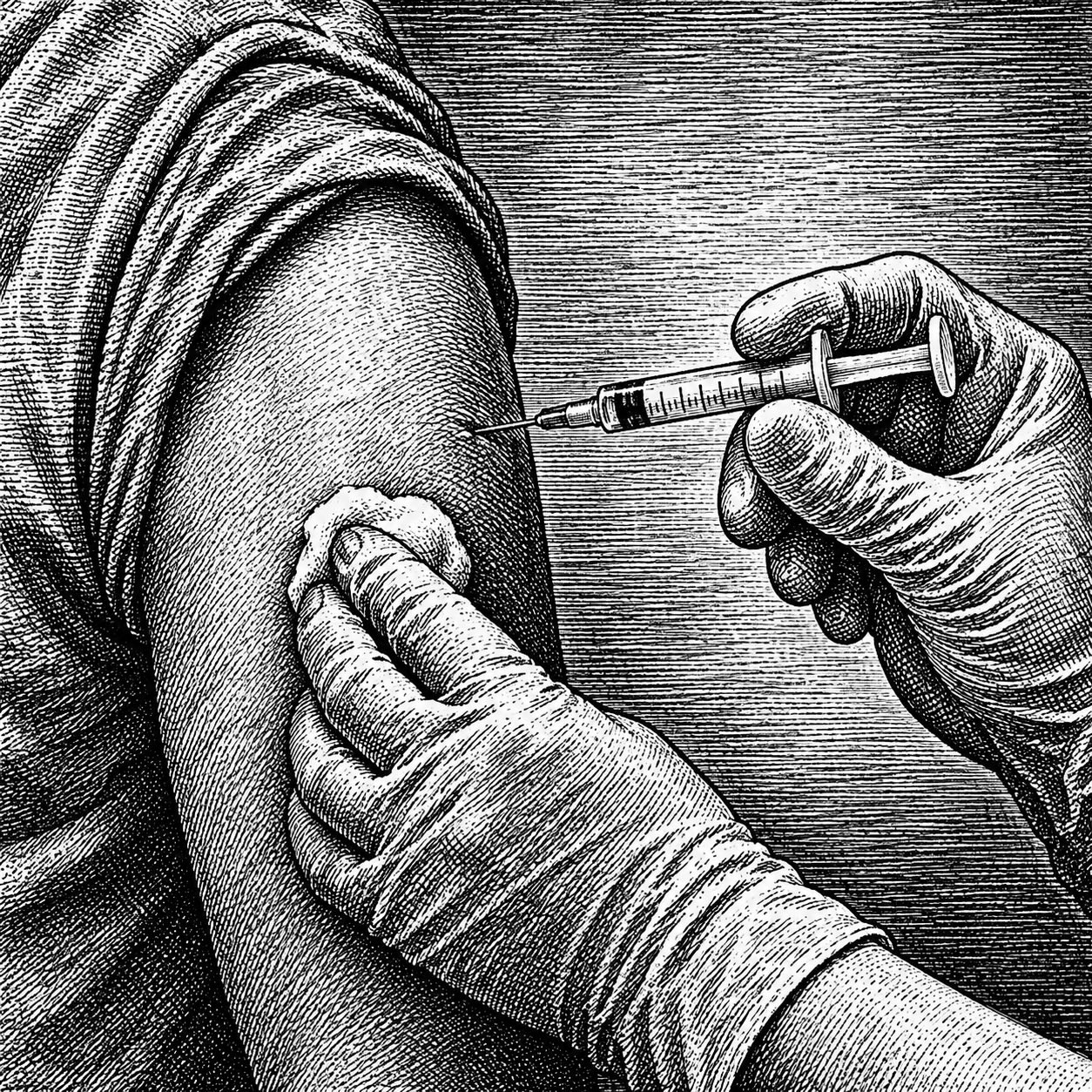
MONTGOMERY, Ala. — Alabama Attorney General Steve Marshall has joined a multistate effort asking the U.S. Supreme Court to hear a West Virginia family’s religious challenge to school vaccination requirements, although major religious traditions generally accept vaccination and many encourage it.
Marshall announced Monday, Oct. 19, that Alabama joined a Nebraska-led coalition supporting parents whose daughter was disenrolled from an online-only public school because she did not meet vaccination requirements. The Supreme Court’s docket shows the states filed their friend-of-the-court brief Oct. 13.
The case involves Krystle and Anthony Perry, who object on Christian religious grounds to vaccinations connected to cell lines derived from abortions. According to Marshall’s office, their daughter attended public school online from home before the school district disenrolled her. The Supreme Court docket identifies the dispute as Perry v. Marteney, involving the Upshur County Virtual School.
The parents’ objection does not reflect a general prohibition against vaccination among major religious traditions. A review published by the American Bar Association describes broad acceptance of vaccination across Christianity, Judaism, Islam, Hinduism and Buddhism, while identifying objections within some smaller religious communities.
That distinction, however, does not by itself resolve the family’s constitutional claim. The Supreme Court has held that an individual’s religious beliefs need not be shared by every member of a religious group to receive First Amendment protection. Whether a particular vaccination requirement violates those protections is a separate legal question.
“No family should have to choose between their child’s public education and their faith, yet that is exactly what the Perry family is being forced to do,” Marshall said in the announcement.
As of Tuesday, Oct. 20, the Supreme Court had not agreed to hear the case. The family filed its petition Sept. 4, and the court extended the school officials’ deadline to respond until Nov. 12, according to the docket.
Religious opposition to vaccination is not a broadly shared teaching among major faiths.
Writing in the American Bar Association’s Human Rights magazine, University of Illinois Chicago law professor Mark E. Wojcik summarized research identifying numerous Christian traditions without theological opposition to vaccines, including Baptists, Anglicans, Eastern Orthodox Christians, Pentecostals, Seventh-day Adventists and Jehovah’s Witnesses. The article also describes Judaism as supporting vaccination to protect life and health, Islam and Hinduism as having no general prohibition against it, and vaccination as widely accepted in predominantly Buddhist countries.
The Catholic Church has specifically addressed concerns about vaccines connected to abortions.
In a December 2020 statement, the Vatican’s Congregation for the Doctrine of the Faith said receiving certain COVID-19 vaccines developed or tested using fetal-derived cell lines could be morally acceptable when ethically preferable alternatives were unavailable. The statement distinguished receiving a vaccine from endorsing or participating in the abortion from which a cell line originated.
Religious objections do exist in some smaller communities. The ABA article identifies opposition among some Dutch Reformed congregations and certain faith-healing groups, while stressing that opposition is not universal even within those communities. Christian Science emphasizes spiritual healing but has no strict rule against vaccination, according to the article.
The family’s objections also involve a scientific distinction between the cell lines used to develop or manufacture some vaccines and the ingredients in a finished vaccine.
Children’s Hospital of Philadelphia’s Vaccine Education Center says vaccines do not contain fetal tissue, fetal body parts or fetal cells. Some vaccines are manufactured using descendants of fetal cells, and the finished products can contain minimal quantities of highly fragmented DNA or proteins remaining after purification.
The center identifies vaccines against rubella, chickenpox and hepatitis A among those made using fetal-derived cell lines. That manufacturing connection is different from saying a vaccine contains fetal remains.
The absence of a denomination-wide prohibition does not automatically defeat an individual religious-liberty claim.
In its 1981 decision in Thomas v. Review Board, the Supreme Court held that free-exercise protections are not limited to beliefs shared by all members of a religious sect. The court also cautioned against judges deciding which member of a faith had correctly interpreted its teachings.
That precedent does not establish that the Perrys are entitled to an exemption. It explains why the legal dispute cannot be settled solely by determining whether Christianity or another major religion generally accepts vaccination.
Marshall’s office said lower courts rejected the family’s case. The Supreme Court docket identifies an April 8 decision by the 4th U.S. Circuit Court of Appeals as the ruling under review.
Alabama is one of 16 states supporting the request for Supreme Court review. The others are Alaska, Arkansas, Florida, Idaho, Indiana, Iowa, Kansas, Louisiana, Missouri, Montana, Nebraska, South Carolina, South Dakota, Utah and West Virginia, according to Marshall’s announcement.
The filing asks the justices to take up the West Virginia dispute. It is not a Supreme Court ruling and does not itself change Alabama’s school vaccination requirements.