
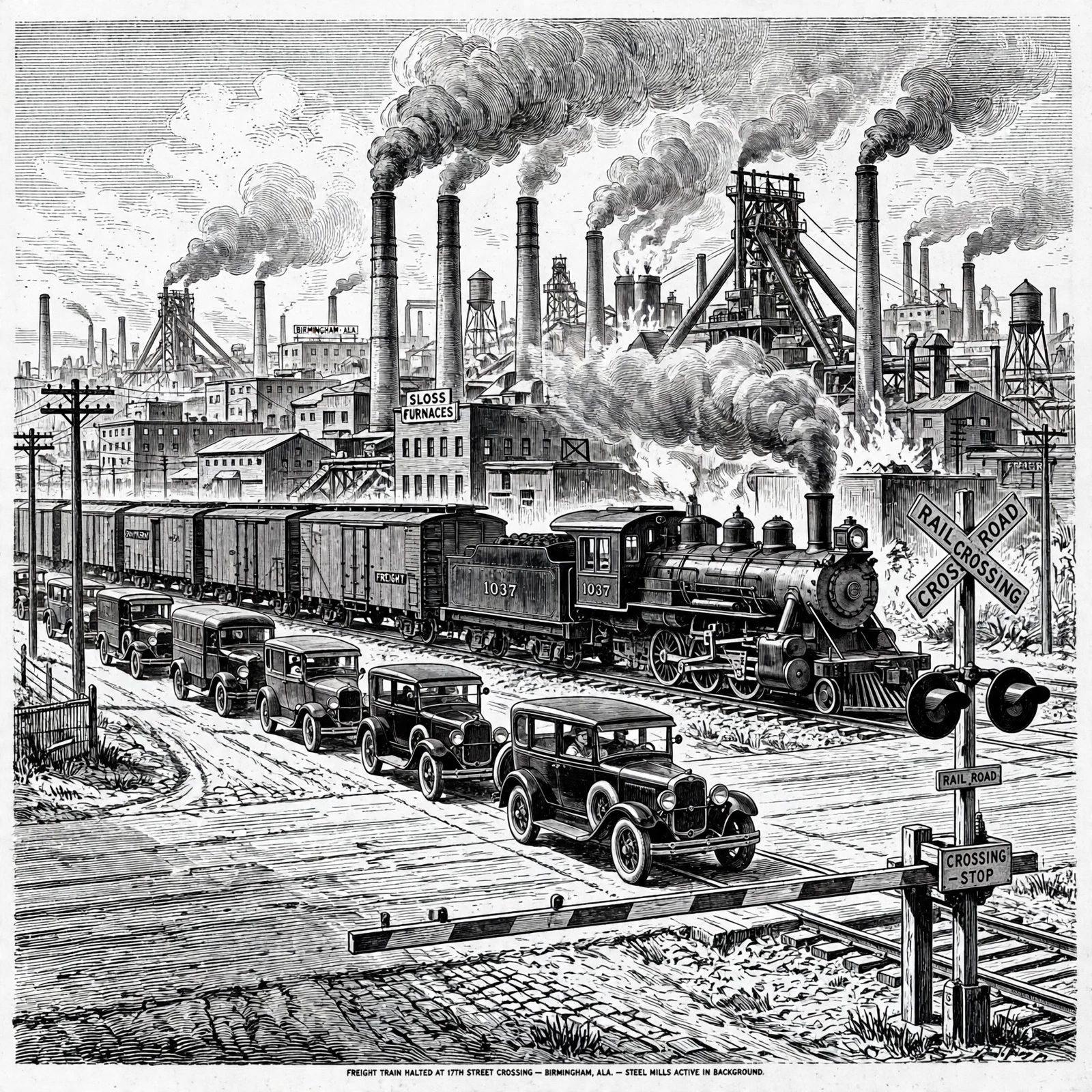

BIRMINGHAM, Ala. — Birmingham and Trussville took the first concrete step Monday toward unclogging one of the region’s most maddening choke points: the rail corridor between Woodlawn and Trussville. At an event at Sloss Furnaces, the two cities announced that engineering firm Kimley-Horn will lead the design and environmental review of REDESIGN Alabama, a project aimed at ending the long train delays that trap drivers and slow emergency crews.
REDESIGN — “Reduce Extended Delays; Enhance Safety; and Invest in Growing Neighborhoods” — would close nine rail crossings between Woodlawn and Trussville and reroute traffic to new grade-separated crossings. The plan calls for an underpass at Brussels Avenue, a pedestrian underpass near 59th Street, an extension of 5th Avenue South to Brussels Avenue, a two-mile extension of the Trussville rail siding into Norfolk Southern’s Norris Yard so trains can pass without blocking motorists, and a bridge at Mary Taylor Road. Train horns would no longer be required along the corridor, a change officials said should make the Harris Homes and Woodlawn neighborhoods quieter.
“Together, we are focused on improving access for residents to get to work, school, and receive emergency services,” Birmingham Mayor Randall Woodfin said. “This project is about removing barriers and making it easier and safer for people to move through their own neighborhoods.”
“Blocked railroad crossings have created frustrations for our residents and presented real concerns for public safety and emergency response,” Trussville Mayor Ben Short said. “This project represents an important step toward delivering a long-term solution to a problem that has impacted our communities for decades.”
The design phase carries a price tag of about $10 million: an $8 million federal Consolidated Rail Infrastructure and Safety Improvements grant awarded in 2023, a $1.5 million match from Norfolk Southern, and about $250,000 each from Birmingham and Trussville.
The catch is what comes next. Construction is not funded. The total project has been estimated at around $150 million, and the cities say design and federal environmental review will take about two years — after which they will pursue federal and other funding for construction.
“This investment will enhance safety, improve quality of life, strengthen supply chain connectivity and help ensure that Birmingham continues to thrive as an important rail and economic hub for decades to come,” said Rodney Moore, Norfolk Southern’s vice president of transportation.
Blocked crossings have been a years-long grievance across Central Alabama. A 2022 bill that would have fined railroads for blocking crossings for two or more hours passed the Alabama House 95-1 but stalled in the Senate. In January, Birmingham began installing electronic message boards at four west-side crossings to warn drivers of approaching trains — the week after a freight train struck a minivan at a Birmingham crossing, killing two women and injuring three children.