
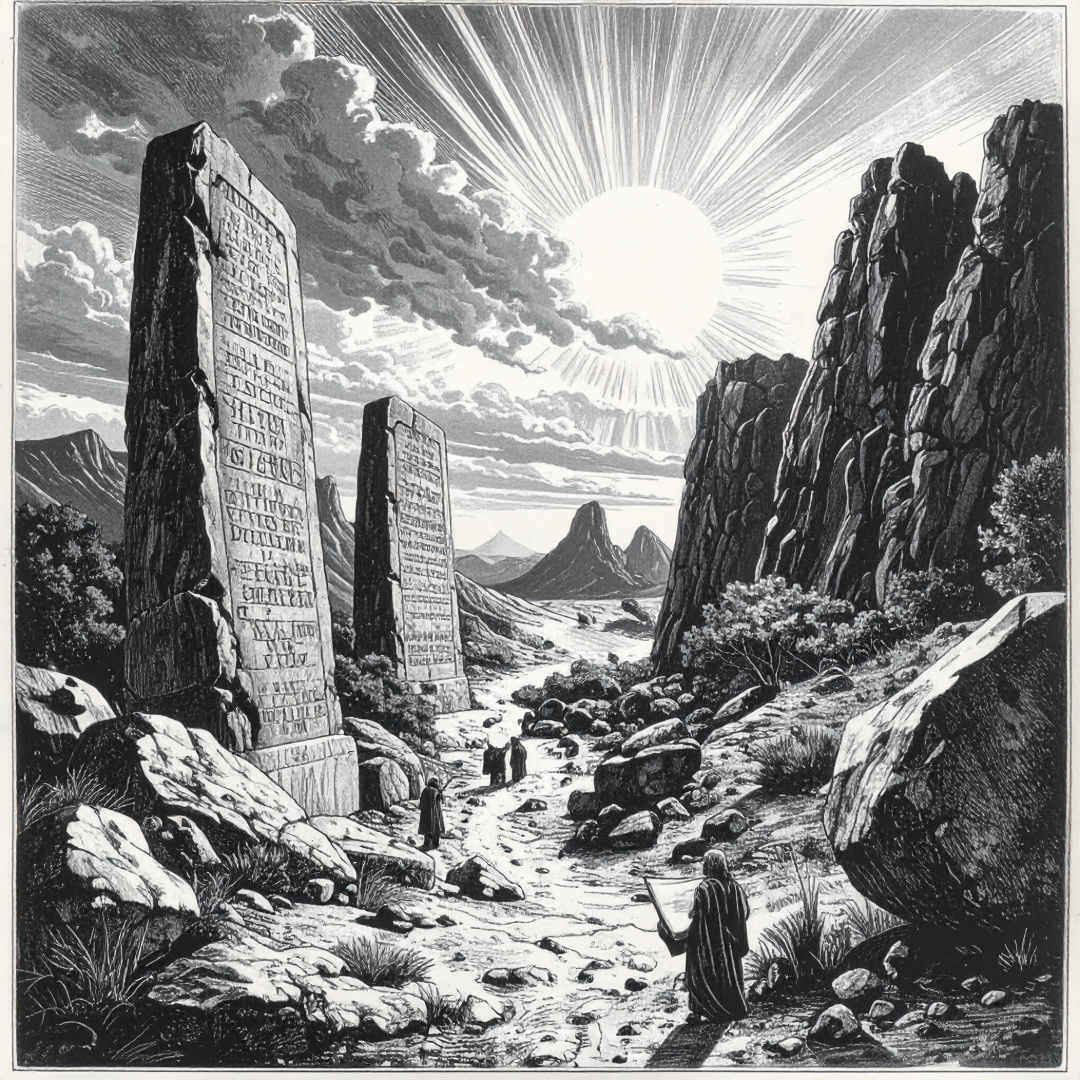
MONTGOMERY, Ala. — Alabama lawmakers are again pushing to require public schools to post the Ten Commandments, this time targeting fifth- through 12th-grade history classrooms in a move critics say is less about teaching history and more about elevating one religious code that many of its champions do not follow themselves.
Senate Bill 99, filed for the 2026 regular session, would require every local school board to display the Ten Commandments and an official “context statement” in each history classroom and at least one common area in every public school, subject to private donations for the signs. The bill declares the commandments “a key part” of the Judeo‑Christian tradition that allegedly shaped Western civilization and “ultimately the founding of the United States,” language echoed from an earlier House bill that passed last year but stalled in the Senate.
Supporters frame the bill as a neutral civics lesson, asserting that displaying the commandments alongside founding documents like the Declaration of Independence and the Constitution helps students understand the nation’s legal and moral roots. But historians, civil liberties groups and many religious leaders say the measure distorts both American history and the diversity of religious belief — including wide disagreement over which version of the Ten Commandments should even be posted.
The American Historical Association urged senators to reject the earlier HB 178 and its companion SB 166, warning that the legislation would “require schools to promote an oversimplified account of the American founding” and ignore decades of scholarship on religion in U.S. history. The group noted that the U.S. Supreme Court struck down a nearly identical Kentucky classroom‑posting law more than 40 years ago in Stone v. Graham, and pointed out that a Louisiana law mandating Ten Commandments displays in classrooms was quickly blocked in federal court last year.
Civil rights advocates say Alabama is inviting the same litigation, at taxpayers’ expense. The Alabama bill leans heavily on talking points popular in Christian nationalist circles, casting the Ten Commandments as an indispensable “historical truth” while the U.S. Constitution itself is famously silent on the Bible and Christianity and explicitly bans religious tests for public office.
For critics, the political context is as telling as the text. The push to put the Ten Commandments on classroom walls comes even as many of the same Republican lawmakers decry the specter of “Sharia law” and warn against supposed creeping theocracy from non‑Christian faiths. Advocates for church‑state separation say it is hard to square those alarms with a bill that would literally enshrine one faith’s sacred code at the front of public school classrooms.
The legislation also paper‑over deep theological differences about the commandments themselves. Jewish, Catholic, Protestant and other traditions use different numbering, wording and emphases, meaning there is no single, uncontested “Ten Commandments” text to post. Earlier Alabama proposals specified one approved version tied to a particular Protestant tradition, effectively choosing winners and losers among faiths while claiming to speak for “Judeo‑Christian values.”
Opponents note that some of the most politically sensitive injunctions — bans on graven images, directives about Sabbath observance and the command to have “no other gods” — sit uneasily alongside both modern American life and the Constitution’s promise of religious freedom. Public officials championing the displays often highlight commands against stealing and killing while quietly sidestepping the commandments that would complicate consumer culture, Sunday commerce and religious pluralism in a state with growing Muslim, Hindu and nonreligious communities.
Faith leaders in and beyond Alabama have warned that elevating a single religious code in public schools risks marginalizing religious minorities and nonbelievers. In previous hearings on similar bills, clergy from Jewish and mainline Christian congregations testified that mandatory Ten Commandments displays would “unfairly sideline” Alabamians who do not share the majority’s theology, especially children who have no real choice about which school they attend.
Even some historians of religion argue that if lawmakers truly wanted students to grapple with the Ten Commandments as history, they would encourage robust study of the multiple versions found in the Bible and the long, contested history of how different communities have interpreted them — not present one political reading as “historical truth” on a classroom poster. Instead, critics say, SB 99 treats sacred text as a campaign prop while brushing past the basic fact that the people wielding it in Montgomery are no more faithful to every commandment than anyone else.
SB 99 is pending in the Senate Education Policy Committee, with no final action yet scheduled. If it advances, Alabama could quickly become the next test case in a renewed wave of lawsuits over where the line falls between teaching about religion — and preaching it — in the nation’s public schools.