
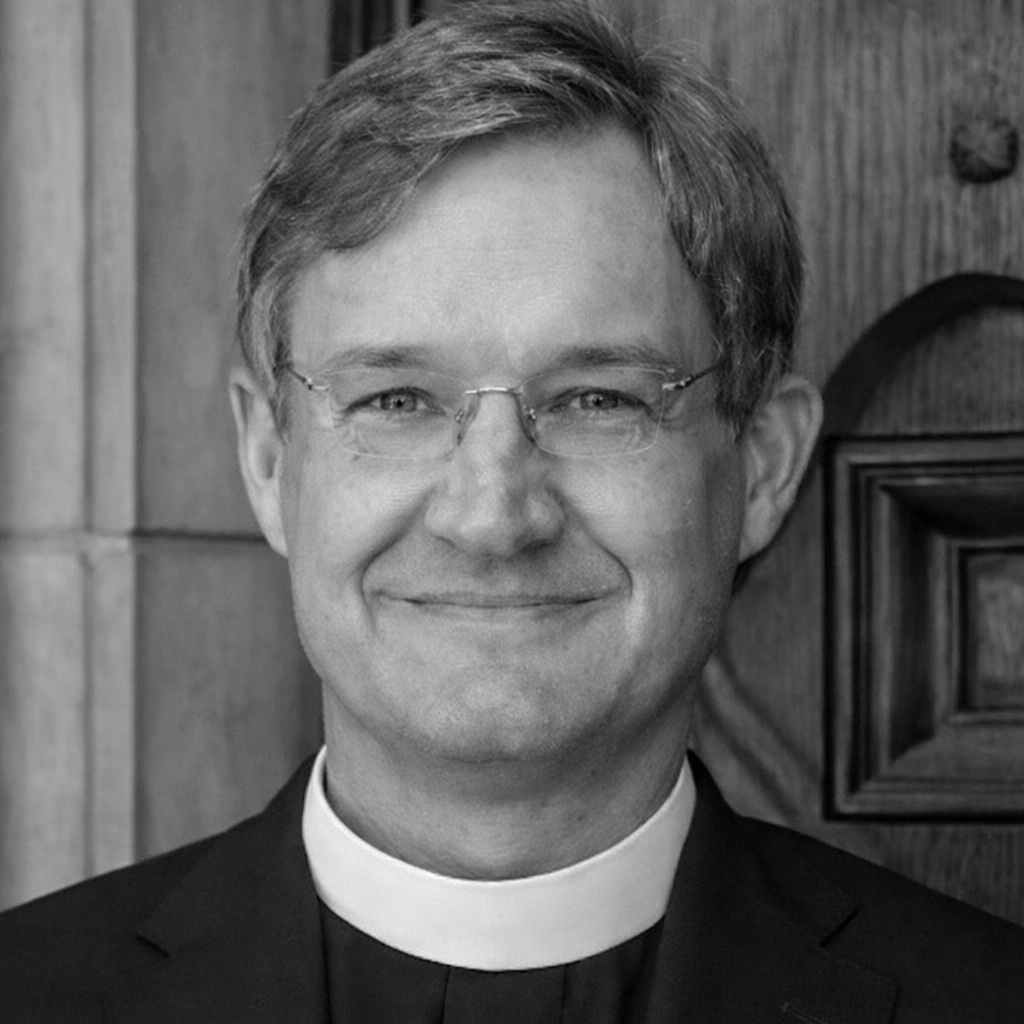
BIRMINGHAM, Ala. — The election of a new Episcopal bishop in Alabama is putting a spotlight on a quieter, more progressive strain of Christianity in a state where white evangelical and MAGA-inflected politics often define religion in the public square.
The Very Rev. Richard T. Lawson III, dean of St. John’s Cathedral in Denver, Colorado, was elected Jan. 31 as the 13th bishop of the Episcopal Church in Alabama during a special convention at the Cathedral Church of the Advent in downtown Birmingham. He won on the first ballot, receiving 108 clergy votes and 184 lay votes, clearing the required simple majority in both orders. Lawson will succeed the Rt. Rev. Glenda Curry, who has led the diocese since 2021, after the wider Episcopal Church completes its consent process and he is ordained and consecrated June 27 at Advent.
Lawson already has ties to the state, having previously served in the Diocese of Alabama and graduated from Auburn University, a résumé that helped reassure delegates who will likely live with his leadership for the next 15 to 20 years. Supporters in Alabama and Colorado have described him as a thoughtful preacher, approachable pastor and experienced administrator shaped by ministry in multiple dioceses.
The Episcopal Diocese of Alabama, which includes more than 70 congregations, occupies a distinctive niche in a Bible Belt religious landscape dominated by Baptist, Pentecostal and other evangelical churches. Unlike the pulpit-centered, free-form worship common in many evangelical congregations, Episcopal parishes follow a set liturgy that moves through prayers, Scripture readings, a sermon and Holy Communion drawn from the Book of Common Prayer. Services are typically led by seminary-trained clergy and rooted in historic creeds, sacramental theology and the Anglican tradition, which emphasizes Scripture, tradition and reason as sources of authority.
That model stands in contrast to much of Alabama’s evangelical world, where pastors may rise through local recognition or independent Bible schools, preaching extemporaneously and often without formal graduate-level theological training. Evangelical churches in the state have tended to highlight personal conversion, biblical inerrancy and individual morality, sometimes with looser denominational structures and fewer mechanisms for clergy credentialing or accountability than in liturgical bodies like the Episcopal Church.
Nationally and in Alabama, the Episcopal Church has generally aligned with mainline Protestant bodies on hot-button issues, backing women’s ordination, LGBTQ+ inclusion and a more expansive social gospel that frames racism, poverty and immigration as moral questions. Episcopal leaders have marched for civil rights, stood with Indigenous protesters at Standing Rock and spoken out against white supremacy, actions justified in official statements as part of a “Jesus Movement” that links worship to advocacy for the vulnerable.
White evangelicalism in Alabama, by contrast, has often been intertwined with conservative politics, particularly on “culture war” fights over abortion, same-sex marriage, school prayer and what is taught about race and gender. Historians note that many southern evangelicals defended segregation well into the late 20th century and later helped power the rise of the Christian right, an alliance that today spills into MAGA-style rhetoric about nationalism, immigration and distrust of government institutions. In practical terms, that has meant pastors parsing Scripture from the pulpit in ways that reinforce Republican priorities, from opposition to LGBTQ+ rights to resistance to federal voting-rights enforcement.
The Episcopal Church, including in Alabama, has not been immune to conflict, but its national leadership has largely moved in the opposite direction, blessing same-sex marriage, supporting refugee resettlement and urging environmental stewardship. Episcopal bishops and parish vestries have issued statements condemning white nationalism and participated in peaceful demonstrations, framing their activism as a response to the command to “love thy neighbor” and to protect human dignity, not as an endorsement of any party.
One of the sharpest contrasts between Episcopalians and many evangelicals lies in how clergy are formed and how religious authority is understood. Episcopal priests and bishops are generally required to complete accredited seminary training, including graduate coursework in biblical languages, church history, ethics and pastoral care, before ordination in a process that also involves psychological screening, background checks and oversight by diocesan commissions on ministry. Bishops like Lawson are elected by clergy and lay delegates after months of interviews, background research and public “walkabout” sessions, and the wider church’s standing committees and bishops must consent before an election becomes final.
By contrast, many evangelical and Baptist pastors in Alabama emerge from congregational systems where each local church sets its own standards and may call leaders without formal seminary degrees, licensing them through internal processes that can range from rigorous mentorship to informal recognition. That autonomy has allowed gifted preachers to rise from modest backgrounds and build large ministries, but it has also meant that doctrinal stances, end-times predictions and culture-war talking points can be shaped largely by the pastor’s own reading of Scripture and preferred media sources, with limited outside checks.
Episcopal governance, by design, places more weight on shared discernment. Bishops, clergy and laity meet in diocesan conventions, and national General Convention sets policy through resolutions and canonical changes debated in open session rather than from a single pulpit. The emphasis on liturgy and common prayer likewise restricts how much any one priest can improvise, since sermons are framed by assigned lectionary readings and prayers shared across the denomination.
Religion scholars say Alabama’s mix of liturgical churches and evangelical congregations has long shaped the state’s politics and culture, from prohibition battles to civil rights and the recent fights over LGBTQ+ rights and “critical race theory.” Evangelical churches have provided many of the foot soldiers for conservative causes, while smaller mainline and Episcopal parishes have sheltered activists pushing racial reconciliation, voting rights and criminal justice reform.
Lawson’s election gives the Episcopal Diocese of Alabama a chance to sharpen that alternative witness at a moment when many residents say they are weary of preachers doubling as partisan surrogates. His supporters within the diocese point to his experience in diverse urban and regional settings as a sign he can navigate both Birmingham’s changing inner city and the smaller towns where Episcopalians remain a minority voice. If the consent process stays on track, Lawson will be seated just months before the 2026 midterms, positioning him to help define what a more educated, liturgical and socially engaged Christianity looks like in a state where “Christian” is still often assumed to mean white, evangelical and firmly aligned with MAGA politics.