
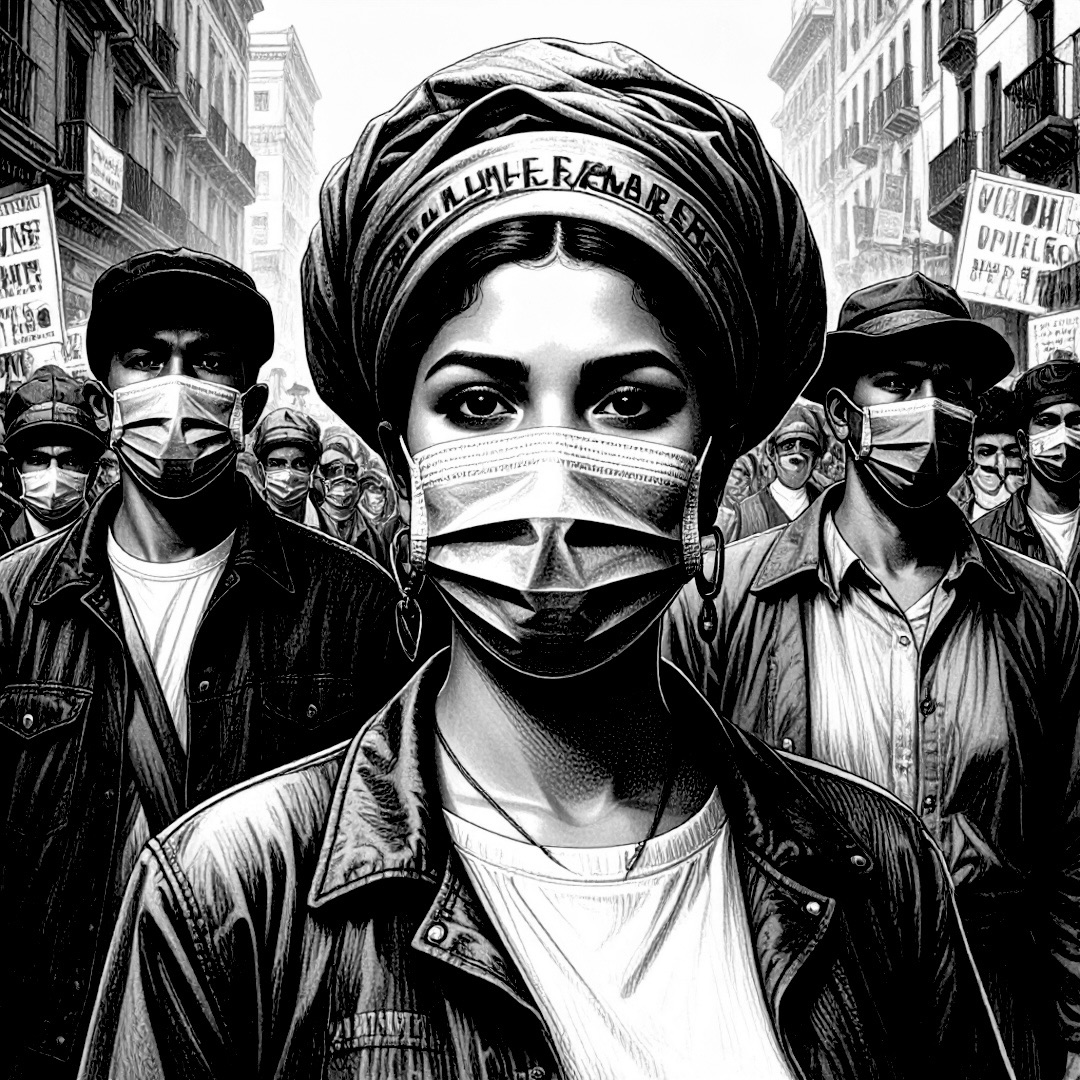
MONTGOMERY, Ala. — The Alabama House of Representatives has passed a bill that would require protesters wearing medical masks to show a doctor’s note to law enforcement upon request, expanding a decades-old anti-mask provision that traces its roots to efforts to curb Ku Klux Klan activity.
House Bill 168, sponsored by Rep. Jamie Kiel, R-Russellville, cleared the House on Tuesday and now heads to the Senate. The measure amends Alabama’s loitering statute, which already makes it a crime to be masked while loitering or congregating in a public place, with limited exceptions.
Under current law, a person commits loitering if, “being masked, [he or she] loiters, remains, or congregates in a public place,” with carve-outs for masquerade parties, public parades and presentations of an educational, religious or historical character. HB 168 would keep that framework but add a new requirement for protesters who wear medical or surgical masks: if an officer asks, they must produce “documented medical guidance,” such as a physician’s note, or risk being charged under the loitering provision.
Supporters say the change is needed so police can identify demonstrators if a protest turns violent or destructive, pointing to recent incidents where masked federal agents — including ICE personnel — wore masks while operating in Alabama without facing the same scrutiny under the existing law. Kiel has argued that people who need to wear a medical mask for health reasons would still be allowed to do so while ensuring “law enforcement can legally identify individuals when necessary,” according to a report by WIAT published by Yahoo News.
Democrats and civil liberties advocates counter that the bill would chill speech and raise First Amendment concerns by putting an extra hurdle in front of people who want to protest while taking precautions against illness or retaliation. Opponents quoted in that report warned the requirement is “prone to misuse” and could make people feel less safe speaking out at the State House.
Alabama’s anti-masking rules have a long and politically fraught history. In 1949, the Legislature passed an “anti-masking bill” aimed at the Ku Klux Klan after Klansmen raided interracial gatherings at camps near Birmingham, including a Girl Scout training session at Camp Fletcher, prompting a coalition of business and civic leaders to demand a crackdown on Klan terror. A Time magazine story from that era reported that the state made it a misdemeanor, punishable by up to a year in jail or a fine, to appear in public wearing a mask, in what was described as the first such law in the Deep South since Reconstruction.
Legal scholars have noted that Alabama’s masking language later migrated into the loitering statute, where it remains today as subsection (a)(4) of Section 13A-11-9 of the Code of Alabama. While many state anti-mask laws were written to target the Klan, some states have since narrowed them by adding an “intent to intimidate” requirement; Alabama’s law does not include that language.
HB 168 is part of a broader, ongoing debate over how far Alabama can go in regulating masks and anonymous protest in the wake of the COVID-19 pandemic and renewed scrutiny of anti-mask statutes nationwide. The bill’s summary describes it as “relating to crimes and offenses” and “mask usage policies,” and legislative tracking shows it was introduced Jan. 13, reported out of committee Jan. 21 and passed the House Jan. 27.
As of Friday, the bill had not yet passed the Senate or been signed by the governor, meaning the new protest-mask requirement is not yet in effect. If the Senate approves the measure and the governor signs it, Alabama would put a modern twist on a Klan-era anti-mask law by explicitly tying the requirement for a doctor’s note to the act of protesting in a mask.