
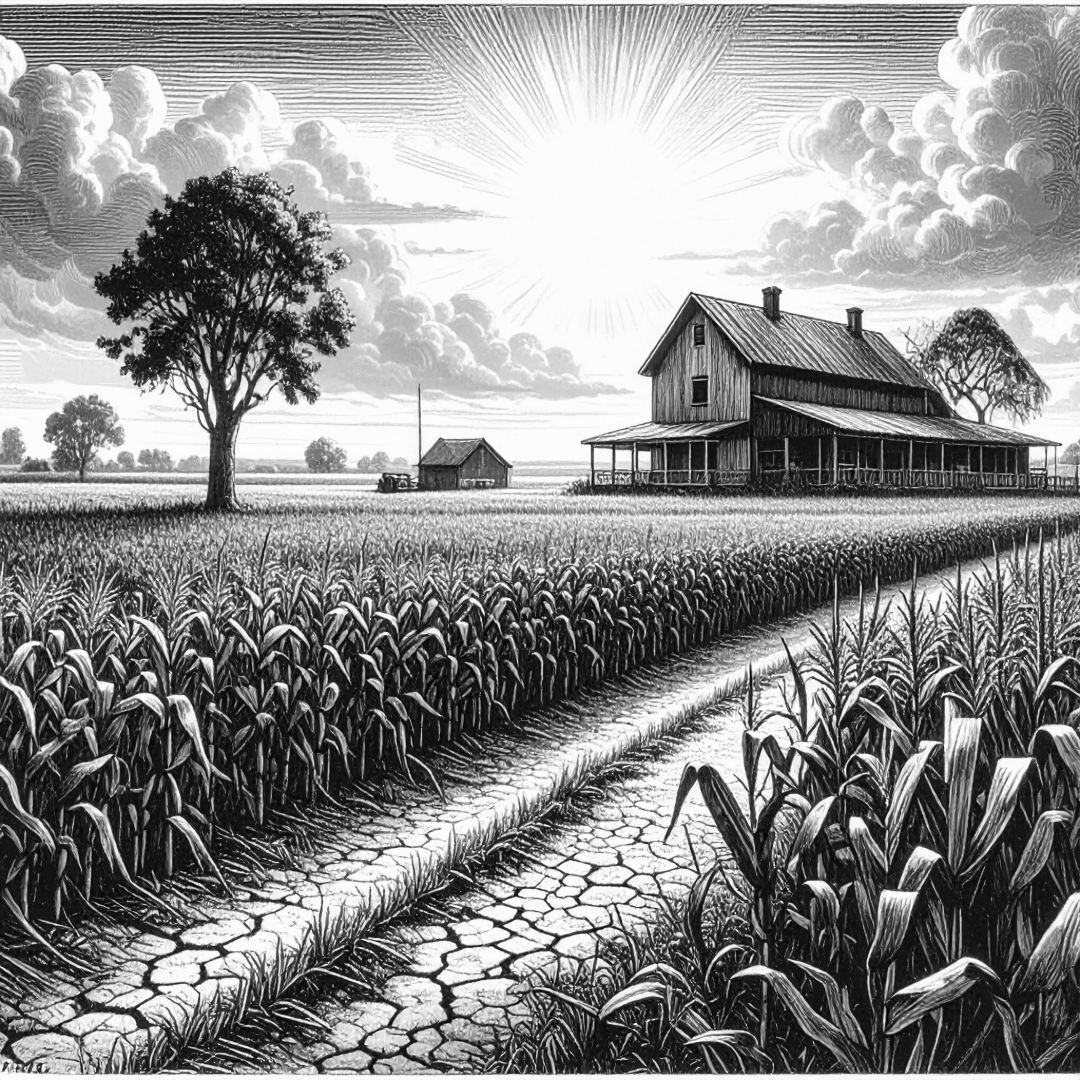
MONTGOMERY, Ala. — The U.S. Department of Agriculture has designated 19 Alabama counties as primary natural disaster areas due to prolonged severe drought, opening access to emergency loans for farmers battered by low yields and hay shortages.
Alabama Agriculture Commissioner Rick Pate announced the Jan. 8 declaration by USDA Secretary Brooke Rollins, which covers Barbour, Bibb, Butler, Chambers, Coffee, Conecuh, Covington, Crenshaw, Dale, Escambia, Geneva, Henry, Houston, Lee, Monroe, Pickens, Pike, Shelby and Tuscaloosa counties. Contiguous counties — including Baldwin, Bullock, Chilton, Clarke, Colbert, Coosa, Fayette, Franklin, Greene, Hale, Jefferson, Lamar, Lauderdale, Lowndes, Macon, Montgomery, Perry, Randolph, Russell, St. Clair, Sumter, Talladega, Tallapoosa, Walker and Wilcox — also qualify for aid.
“The drought severely affected several Alabama counties, impacting row-crop yields and forage availability,” Pate said. “Many cattle producers were unable to harvest sufficient hay for the winter months.”
Farm Service Agency emergency loans, available through Aug. 29, 2026, help replace equipment, livestock or refinance debts for eligible producers based on losses, collateral and repayment ability. The Small Business Administration followed up Jan. 16 with economic injury disaster loans up to $2 million at low interest for drought-hit businesses and nonprofits, with applications due Aug. 31.
U.S. Sens. Katie Britt and Tommy Tuberville have pushed related funding: Britt secured $6.25 million in fiscal 2026 agriculture appropriations for rural water projects, $1 million for peanut drought research and $2 million for the University of Alabama’s CONSERVE water program; Tuberville requested $4 million for irrigation in Colbert County amid watershed challenges.
Alabama has faced repeated USDA drought designations, including 25 counties in September 2025, 24 in April 2025 and smaller clusters in prior years like Baldwin and Mobile in 2020. The process requires D2 severe drought for eight weeks or worse per the U.S. Drought Monitor, triggering aid under the Consolidated Farm and Rural Development Act.[9][10][11][12]
Current conditions remain strained, with a National Weather Service drought statement issued Jan. 22 noting persistent dry soils in south Alabama.
Experts point to irrigation expansion, like Tuberville-backed projects, drought-resistant crops and federal programs such as the $23.9 million Circuit Rider water initiative secured by Britt. Longer-term, a new farm bill — stalled since 2018 extensions — could bolster conservation and insurance, while state officials urge producers to contact local USDA centers now.