
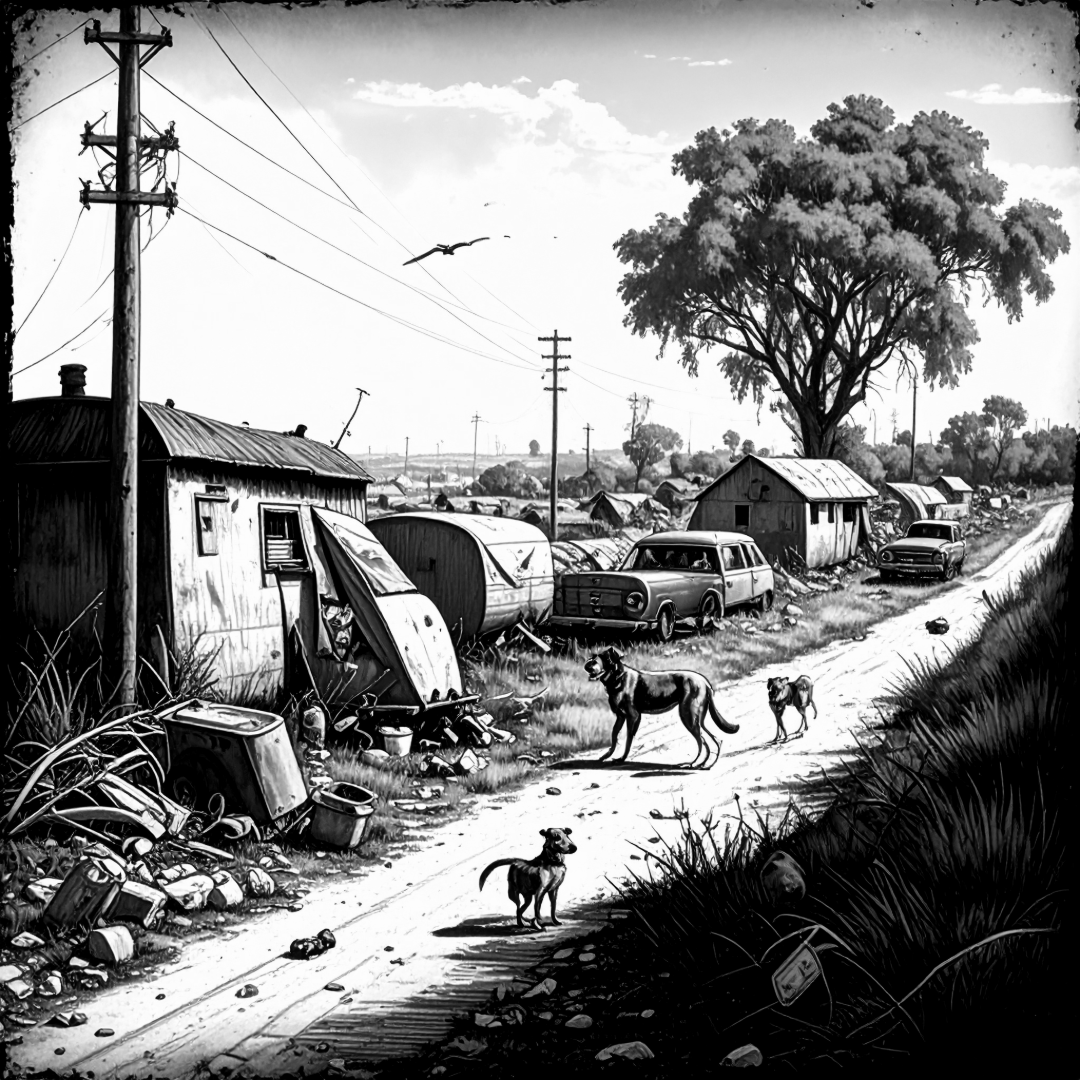
EMPIRE, Ala. — A small, itinerant religious group that calls its leader the reincarnation of Jesus Christ has been ordered off a wooded campsite in Walker County after a multi-agency raid that has reignited questions about how Alabama treats nontraditional faiths and people living on the margins. Deputies and federal agents served a search warrant Dec. 30 at an encampment off York Mountain and Blackberry Ridge roads near the Empire community, where roughly 15 to 30 people had been living in tents, vehicles and a camper under the banner “More Than the Prophet Ministries,” according to Walker County Sheriff Nick Smith and local news reports. Authorities seized a handgun, marijuana and drug paraphernalia and arrested several adults who refused to identify themselves, while releasing others — including at least two children — with instructions to leave the property that day.
The group’s leader, known to followers as Lando or “Reverend Lamp,” describes himself as “the only begotten son of the living God” and has been portrayed by supporters and critics alike as claiming to be an incarnation or reincarnation of Jesus Christ. Local television station WBRC reported that members believe Lando is an incarnation of Jesus, language that aligns with how he presents himself in videos and social media posts promoting what he calls “Christ 100 percent life death and resurrection.” In interviews with Birmingham-area outlets after the raid, Lando has framed the ministry as a Christ-centered community of “honest, hardworking people” seeking to live out the Gospel together at the campsite and previously in Arkansas.
Public accounts suggest the group blends evangelical Christian language with a strong emphasis on Lando’s unique spiritual status and on separating from mainstream society. Social media posts associated with More Than the Prophet Ministries emphasize total identification with Christ’s suffering, death and resurrection, along with calls to leave behind “the world” and conventional church life to follow Lando’s teaching. Members traveled from as far as New York, California, Florida and Georgia and lived in tents and vehicles without grid electricity, relying on generators and makeshift facilities, which the sheriff described as legal so long as the property owner consented.
Neighbors complained for months about people walking through nearby properties at night and about a growing encampment on land that Walker County officials initially struggled to tie to a specific owner. After authorities finally contacted the owner, who had rented to the group, deputies moved to clear the camp when it appeared the group was overstaying and trespassing. The Walker County Sheriff’s Office described the group as “out-of-state squatters,” though the leader says he has paid monthly rent to a woman who owns the land and that some members were already preparing to leave at the end of December.
Without county zoning rules that might limit campsite-style living, officials said their hands were tied until they could show probable cause for a search warrant based on nuisance complaints, possible drug violations and uncertainty over who owned and controlled the property. Civil liberties advocates note that fringe religious movements often come into conflict with local authorities through property disputes, housing codes and police raids that blur the line between legitimate law enforcement and hostility toward nontraditional beliefs. While no major rights group has yet launched a public campaign around the Empire encampment, the pattern — unusual theology, outsider members, rural encampment and then a show-of-force raid — echoes past clashes between new religious movements and Southern law enforcement.
Alabama has a long history of unconventional Christian offshoots and sectarian groups, from white supremacist Christian Identity circles to small prophetic ministries centered on a single charismatic teacher. Unlike some older sects that rooted themselves in permanent compounds or meetinghouses, More Than the Prophet Ministries appears semi-nomadic, moving from Arkansas to Walker County and now, according to the sheriff, toward Jefferson County in search of a new base. Other small ministries in rural Alabama share features such as strict separation from mainstream churches and a heavy focus on end-times prophecy or a leader’s special revelation, but few go as far as styling the leader as a living Jesus figure whose identity is central to the faith.
The Walker County group also differs from more militant sects linked to paramilitary activity, with local authorities reporting nuisance calls and drug-related concerns but no documented spike in serious crime tied directly to the encampment before the raid. For residents of Birmingham and across Alabama who value pluralism and religious freedom, the Empire encampment poses a familiar tension: how to protect neighbors’ safety and property rights without criminalizing people for following an unconventional Christ or choosing to live outside the mainstream. As the group looks for a new foothold in Jefferson County, that debate is likely to move closer to the urban core, testing whether local leaders can respond to fringe faiths with both skepticism and a commitment to constitutional protections that apply as much to a self-proclaimed “Jesus of Alabama” as to any established church.