
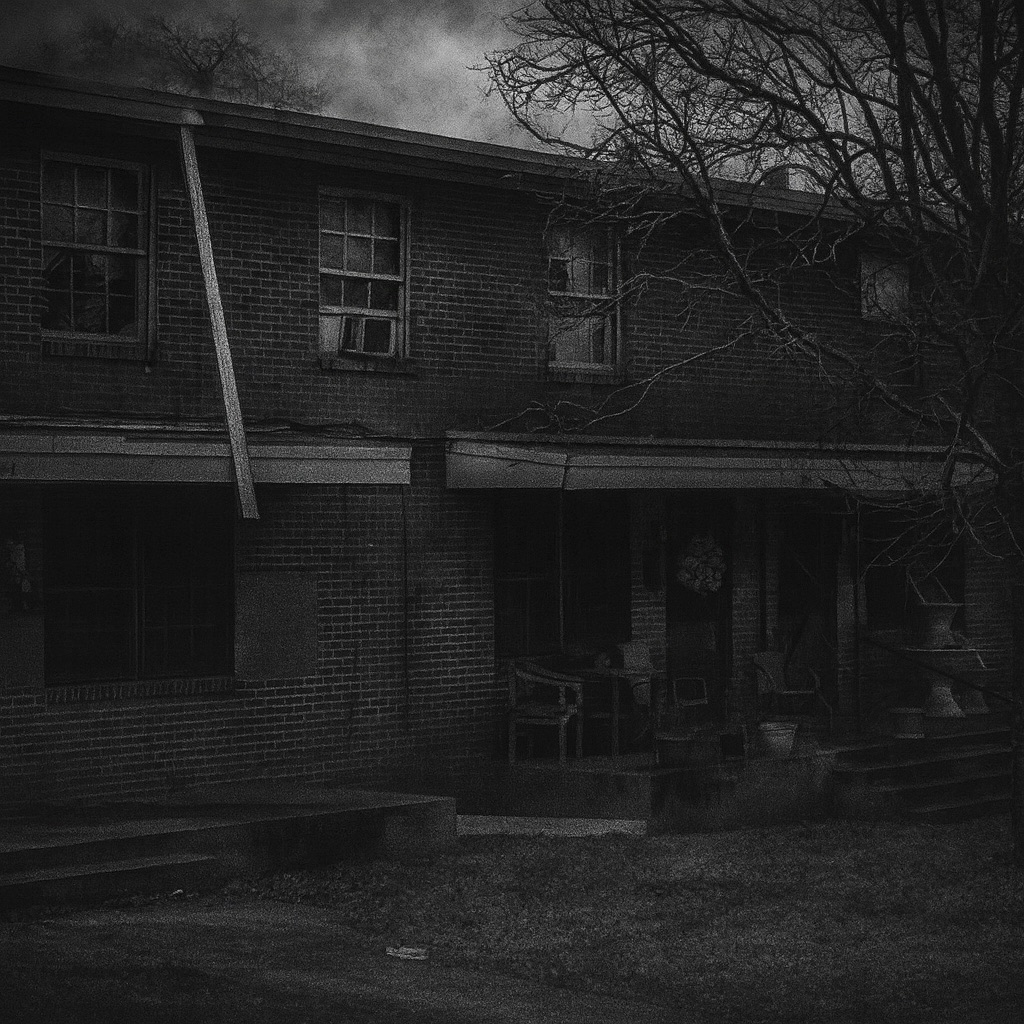
BIRMINGHAM, Ala. — A Birmingham police officer fatally shot a man late Friday in the Kingston community, the second deadly police shooting linked to a low-income neighborhood in the city in just over a month. The shooting happened outside an apartment in the Rev. Dr. Merrill Todd Homes, a mid-century brick public housing development that residents and city leaders have long associated with concentrated poverty, chronic violence and a sense of isolation from the rest of Birmingham.
Authorities said officers were called to the complex late Friday on a report of a disturbance, and one officer shot a man during the encounter outside a unit on 45th Street. Emergency crews took the man to UAB Hospital, where he was pronounced dead; as of early Saturday, officials had not publicly released his name or the officer’s identity, nor a detailed account of what led up to the use of force.
The Alabama Law Enforcement Agency’s State Bureau of Investigation typically takes the lead on officer-involved shootings in Birmingham, and findings are forwarded to the Jefferson County district attorney for review. Birmingham police had not issued a formal statement about the Kingston shooting by early Saturday morning, even as video and posts about the incident circulated on social media and from crime reporters.
Friday’s killing comes about a month after an officer shot and killed 36-year-old Vanessa Ragland during a domestic disturbance call at an east Birmingham home, a case in which Chief Michael Pickett later released body-camera footage and pledged transparency amid public concern. In that earlier shooting, the Alabama State Bureau of Investigation said Ragland engaged an officer in a violent struggle before the officer fired, and that investigation remains open.
The Kingston community — including Merrill Todd Homes and surrounding blocks — has been the focus of repeated law enforcement surges after a string of shootings and gun battles, some captured on city technology and local television. In 2023, police boosted patrols in the Merrill Todd Homes area after back-to-back shootings that involved as many as 100 rounds fired in about a minute, prompting officials to describe the violence as targeted but deeply destabilizing for residents who feel trapped between danger and disinvestment.
Many of Kingston’s public housing blocks were built in the mid-20th century as dense brick complexes separated from commercial corridors and often hemmed in by highways and industrial land, a design that advocates say has reinforced segregation, cut residents off from opportunity and left common areas feeling stark and unsafe. Current and former residents interviewed in recent years have described the physical environment — aging facades, worn stairwells and limited green space — as a constant reminder of neglect and a signal that the wider city expects little from the people who live there.
Urban planners and housing advocates have long argued that these “project-style” developments can deepen hopelessness by concentrating poverty, limiting access to services and making it harder for neighbors to build the kind of informal networks that keep streets safe. In Birmingham, those concerns have driven efforts by the Housing Authority of the Birmingham District and City Hall to demolish or radically redesign several legacy complexes into lower-density housing with more light, green space and street connections.
Over the past two decades, officials have used federal HOPE VI and Choice Neighborhoods grants to replace large brick projects with mixed-income neighborhoods of townhomes, duplexes and cottages, aiming to undo decades of what they now describe as “obsolete” design. At Ensley’s former Tuxedo Court, for example, a $20 million HOPE VI redevelopment produced Tuxedo Terrace, a mix of rental and for-sale homes with individual entries and yards in place of long, institutional blocks.
More recently, Birmingham and the housing authority have highlighted the transformation of Southtown, where an aging, barracks-style complex near the medical district is being redeveloped into new senior and family apartments alongside planned commercial space. Developers there have said the old buildings were at “physical obsolescence,” with few amenities and long-standing crime issues, and expressed hope that the new environment will significantly reduce crime and change how residents feel about their own neighborhood.
City leaders and nonprofit partners also have broken ground on small-scale infill projects such as The Cottages on Georgia Road and other cottage-style affordable homes in and near Woodlawn, describing them as part of a shift toward “front-porch” neighborhoods that invite interaction rather than isolating residents in towering blocks. While it is too early for comprehensive crime data on those specific cottage developments, housing officials and developers argue that lower-density designs with more eyes on the street, better lighting and clearer public-private boundaries help reduce violence and give residents a stronger sense of ownership.
In Smithfield, another historic public housing community, a $50 million Choice Neighborhoods Initiative grant is funding a plan to replace much of Smithfield Court with a mix of garden apartments, townhouses, duplexes and cottages, plus a larger neighborhood library and “social innovation center” meant to connect residents to jobs and services. The Smithfield plan is being promoted as a model for shifting from warehouse-like public housing to communities that weave subsidized units into a broader neighborhood fabric, rather than isolating hundreds of low-income households in a single complex.
Despite these redevelopment efforts, many of Birmingham’s older public housing sites — including parts of Kingston — still reflect mid-century planning decisions that left residents living in the shadow of highways and industrial corridors, far from fresh food, stable jobs and reliable transit. Critics say the slow pace of change means that, for many families, daily life remains defined by neglected infrastructure and a persistent sense that their neighborhood is treated as expendable until tragedy forces the rest of the city to pay attention.
The State Bureau of Investigation’s probe into Friday’s shooting at Merrill Todd Homes is ongoing. Officials are expected to release additional details, including the man’s identity, the officer’s status and any available video, as the case moves forward and as community advocates call for answers in a neighborhood that has seen more than its share of gunfire and grief.