
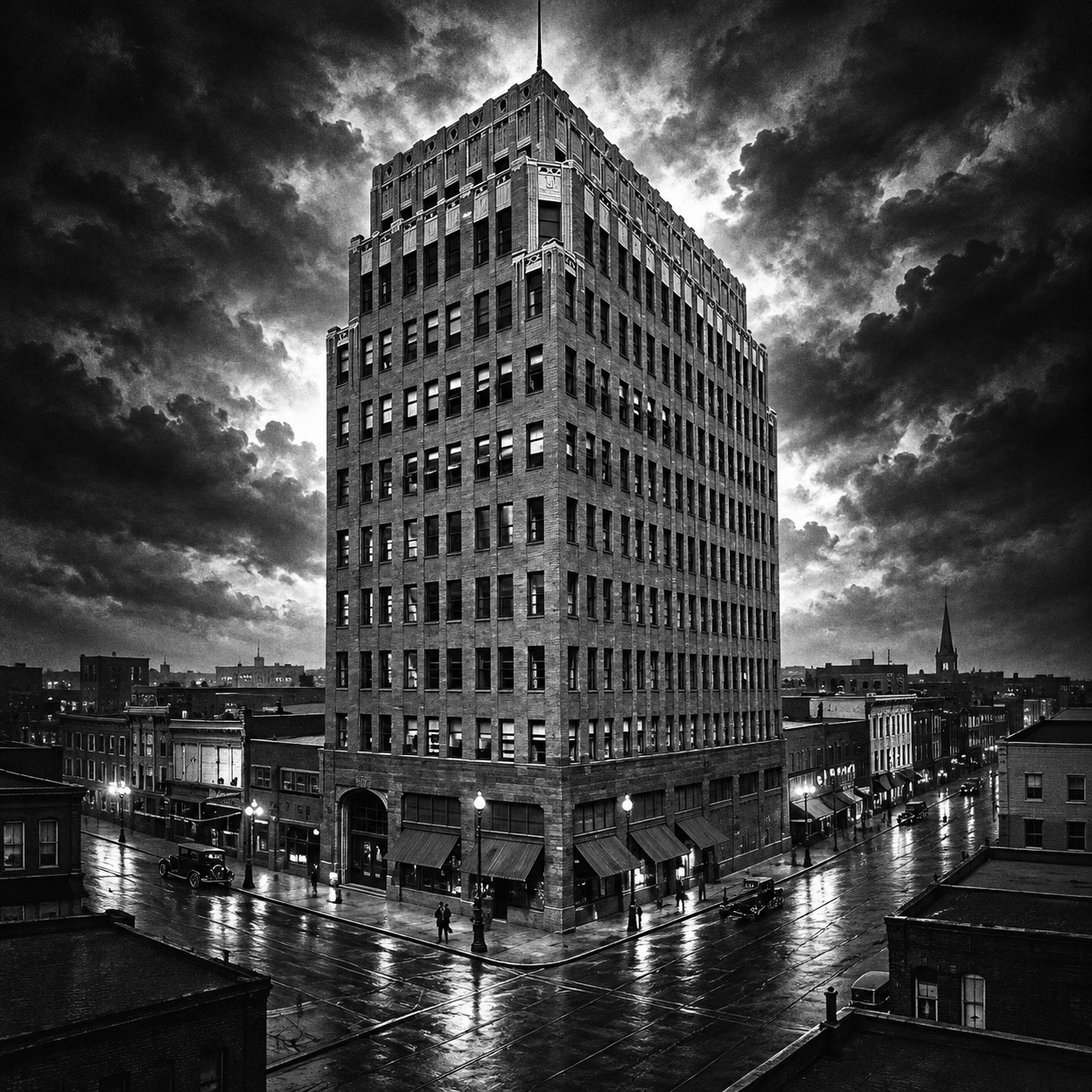
BIRMINGHAM, Ala. — Birmingham is proposing a public library for the site of Ensley’s demolished Ramsay-McCormack Building, abandoning plans for a commercial development intended to echo the landmark that dominated the neighborhood’s skyline for more than 90 years.
Mayor Randall Woodfin outlined the new proposal during a court hearing Thursday, Nov. 5, following years of financing problems and construction delays. The announcement marks a sharp departure from the five-story, roughly $20 million replacement promised when the original 10-story building was torn down in 2021.
The change leaves Ensley without either its longtime architectural centerpiece or the development that was supposed to carry part of its identity forward. Plans for the replacement called for incorporating salvaged brick, marble and terra cotta into a building reflecting the original structure’s architectural character.
The library remains a proposal, with significant steps unresolved. The city must regain control of the property from Ensley District Developers and present the new plan to the Birmingham City Council. Woodfin said he expects above-ground construction to begin in the fourth quarter of 2027, following architectural design and public bidding.
“I will tell you, Ramsay-McCormack is an exception. That is taking way too long. That’s unacceptable,” Woodfin told WBRC after the hearing.
Circuit Judge Marshell Jackson Hatcher gave the city 60 days to firm up its plans and provide an update. The next court hearing is scheduled for Feb. 3, 2027.
Completed in 1929, the Ramsay-McCormack Building was Ensley’s tallest building, rising above the business district as a symbol of the industrial community’s commercial ambitions. Its final demolition took place April 13, 2021, after work began the previous fall.
The promised replacement was meant to preserve something beyond the address. Although reduced to five stories, the new building was designed with taller floors and was expected to stand only 18 feet shorter than the original. It would again have been Ensley’s tallest building, according to contemporary reports.
By then, decades of vacancy and deterioration had left the structure with serious problems. Reporting at the time said inspections found it could not be salvaged and that its walls were not stable enough to retain. The developer concluded that renovation was not feasible because of major structural challenges.
Developers also planned a mix of office and entertainment uses intended to bring people into the business district. Innovation Depot and Birmingham Promise were publicly identified in 2021 as prospective tenants.
Those plans never became a completed building. Despite up to $10 million in city cash and incentives, the development team struggled to assemble financing for the roughly $20 million project.
The latest setback followed the death in August of lead developer Irvin Henderson. At Thursday’s hearing, court-appointed special master Ken Simon said Henderson’s surviving partners lacked his financing contacts and detailed knowledge of the tax credits being pursued for construction. The partners were not comfortable proceeding and planned to step away, according to WBRC’s account of the hearing.
Woodfin then presented the library proposal, saying it would be designed by the architects responsible for Irondale’s new library.
The mayor said the city remained committed to building on the property, regardless of the litigation that has pushed the redevelopment effort forward. The court proceedings stem from lawsuits brought on behalf of neighborhood businesses seeking action on the deteriorating building and its redevelopment.
But some nearby business owners questioned why the city would change the project rather than seek another developer to complete it.
Ranesha Cooper, who moved her Revive Lux Salon to a location across Avenue E from the site, told WBRC that the anticipated redevelopment helped attract her business to the area.
“It’s just disappointing to find out that after 10 years and millions of dollars that they just decided not to do it,” Cooper said.
Nearby business owner Thaddeus Campbell also urged the city to continue pursuing the commercial development.
“Let’s take our time and find another developer to make it happen,” Campbell told WBRC.
Attorney Antonio Spurling, who represents Ensley businesses in litigation against the city, acknowledged that a library could benefit residents but questioned whether it would provide the economic impact of the original project, WVTM reported. That development had been expected to bring nearly 190 jobs, according to the station.
The disappearance of the Ramsay-McCormack Building belongs to a broader history of Birmingham landmarks lost after neglect and redevelopment promises. The city’s Terminal Station, completed in 1909, was demolished in 1969 despite opposition — a loss that continues to serve as a rallying point for preservation advocates.
The circumstances were different. By the time Ramsay-McCormack was demolished, inspections had identified severe structural deterioration. But the redevelopment plan offered Ensley a specific assurance: A new building would recall the tower’s appearance and incorporate pieces of the original.
With the city now pursuing a library, that architectural promise is no longer the announced plan. No construction has begun on its proposed successor, and Woodfin’s latest timetable would put the start of above-ground work more than six years after the landmark’s demolition.