
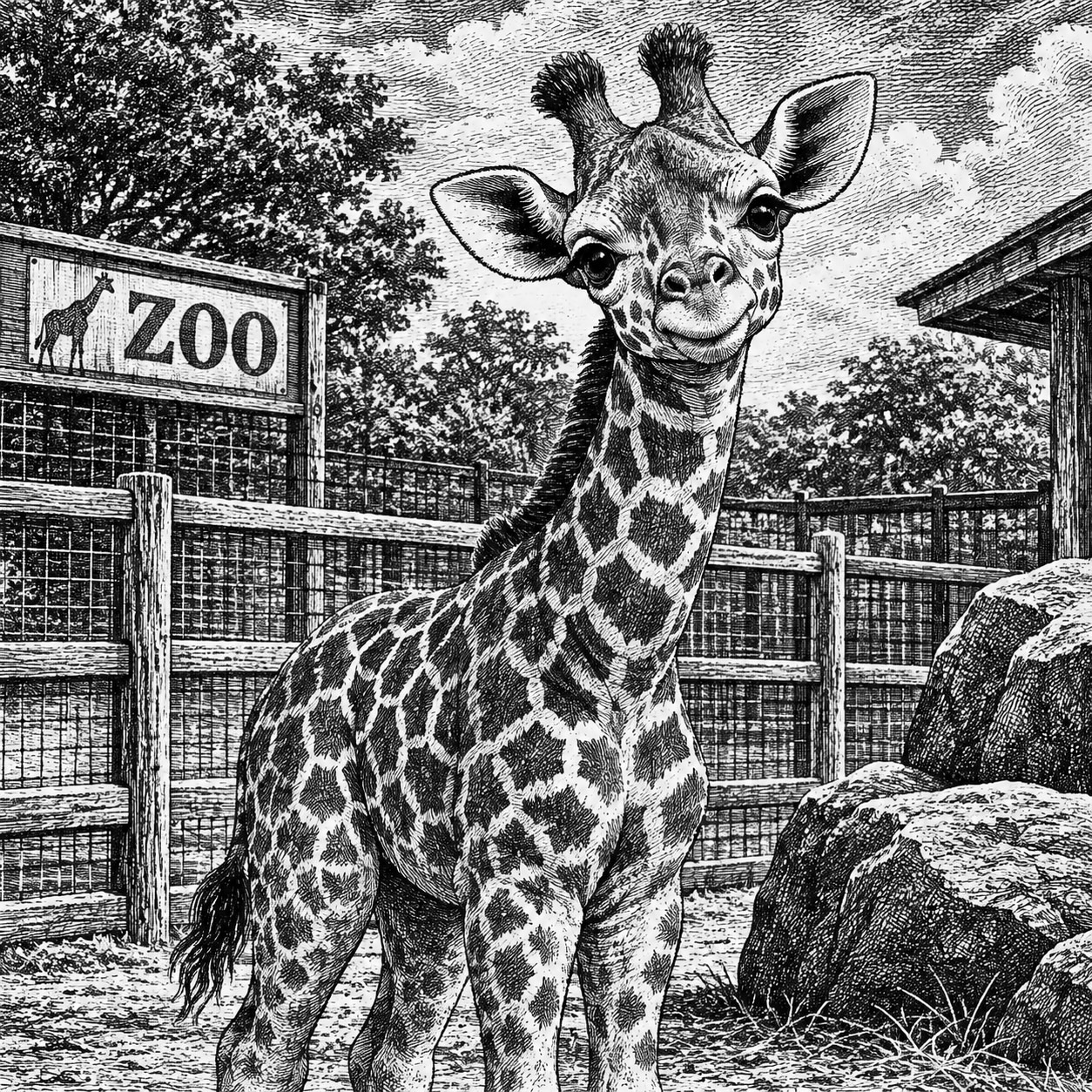
BIRMINGHAM, Ala. — The Birmingham Zoo has added a young male giraffe to its herd, less than a year and a half after the death of its longtime breeding male.
Onduli, a 1-year-old giraffe calf, arrived from the Dallas Zoo last week and was formally introduced to visitors Oct. 12 at the zoo’s Kiwanis Giraffe Encounter. The transfer was coordinated through the Association of Zoos and Aquariums’ Species Survival Plan, a cooperative program that manages animal populations across accredited zoos to maintain genetic diversity and long-term sustainability.
Onduli was born Sept. 24, 2025, at the Dallas Zoo to mother Katie and father Tebogo. He joins three female giraffes at the Birmingham Zoo: Zuri, 16; Ruby, 7; and Mopane, 2.
The young male’s arrival restores a male presence to the zoo’s giraffe group after Jalil, a 20-year-old breeding male, was humanely euthanized May 12 because of declining health and age-related mobility problems. Jalil came to Birmingham from the San Francisco Zoo in 2007 and fathered two calves at the zoo.
The Birmingham Zoo opened April 2, 1955, and was originally known as the Jimmy Morgan Zoo. Its first official exhibit, Monkey Island, was dedicated that same day.
The city assumed responsibility for the zoo in November 1955, giving it an initial annual budget of $663,000. Today, the zoo is an independent nonprofit and the only Association of Zoos and Aquariums-accredited zoo in Alabama.
Onduli will live in Trails of Africa, a mixed-species habitat that also includes an all-male African elephant herd, rhinos, duikers and other African species.
Species Survival Plans use breeding and transfer plans to recommend pairings and moves among participating institutions, with the goal of keeping managed populations healthy, genetically diverse and demographically stable. The AZA says it has nearly 300 such programs.
For giraffes, the move also carries broader conservation significance. The Giraffe Conservation Foundation estimates about 140,000 giraffes remain across Africa, an increase from the fewer than 100,000 reported by the IUCN Red List in 2016, though the group attributes much of the change to improved data and conservation work.
The IUCN recognized four distinct giraffe species in 2025. Preliminary assessments suggest three may qualify as threatened, and the Giraffe Conservation Foundation says three of the four species are highly threatened.
Giraffes remain the tallest land animals, and their scientific name, Giraffa camelopardalis, reflects an early belief that they were a cross between a camel and a leopard.
The Birmingham Zoo said Onduli is now on exhibit in Trails of Africa.