
BIRMINGHAM, Ala. — Jefferson County residents can dispose of old paint, pesticides, gasoline, batteries and other hard-to-discard household materials for free Oct. 17, offering an alternative to improper disposal in a county that says it spends millions of dollars annually cleaning up litter and illegal roadside dumps.
The household hazardous waste collection will run from 8 to 11:30 a.m. Saturday at Camp Bessemer, 3295 King St. in Bessemer, and Camp Ketona, 121 County Shop Road in Birmingham. The event is a drop-off, not a home pickup service, and is open to Jefferson County residents.
Electronics, televisions, large appliances, used household cooking oil and grease, and certain recyclables also will be accepted. Free on-site paper shredding will be available, with a five-box limit.
Getting rid of leftover household chemicals safely can require more planning than putting a bag at the curb. Jefferson County’s 2026 schedule limits household hazardous waste collection to its April and October events, although electronics and paper shredding are offered at additional events throughout the year.
Other disposal options depend on the material and the facility accepting it. The county lists local businesses that take electronics outside its collection events but cautions that televisions, older cathode-ray tube monitors and certain printers may carry fees. Residents are advised to check operating hours and charges before making a trip.
The Environmental Protection Agency recommends contacting local environmental, health or solid waste agencies to identify collection programs. Where those programs are unavailable, some businesses may accept particular materials, such as used motor oil, for recycling or proper disposal.
Not every product described as household hazardous waste is automatically illegal to place in household trash. Waste generated through normal household activities is generally excluded from federal hazardous waste regulations governing industrial and commercial waste, but remains subject to state and local solid waste requirements. Disposal instructions vary by product and jurisdiction.
That regulatory distinction does not eliminate the danger. The EPA warns that improper disposal — including pouring chemicals onto the ground, into drains or storm sewers, or in some cases placing them in regular trash — can pollute the environment, injure sanitation workers and damage septic or wastewater treatment systems.
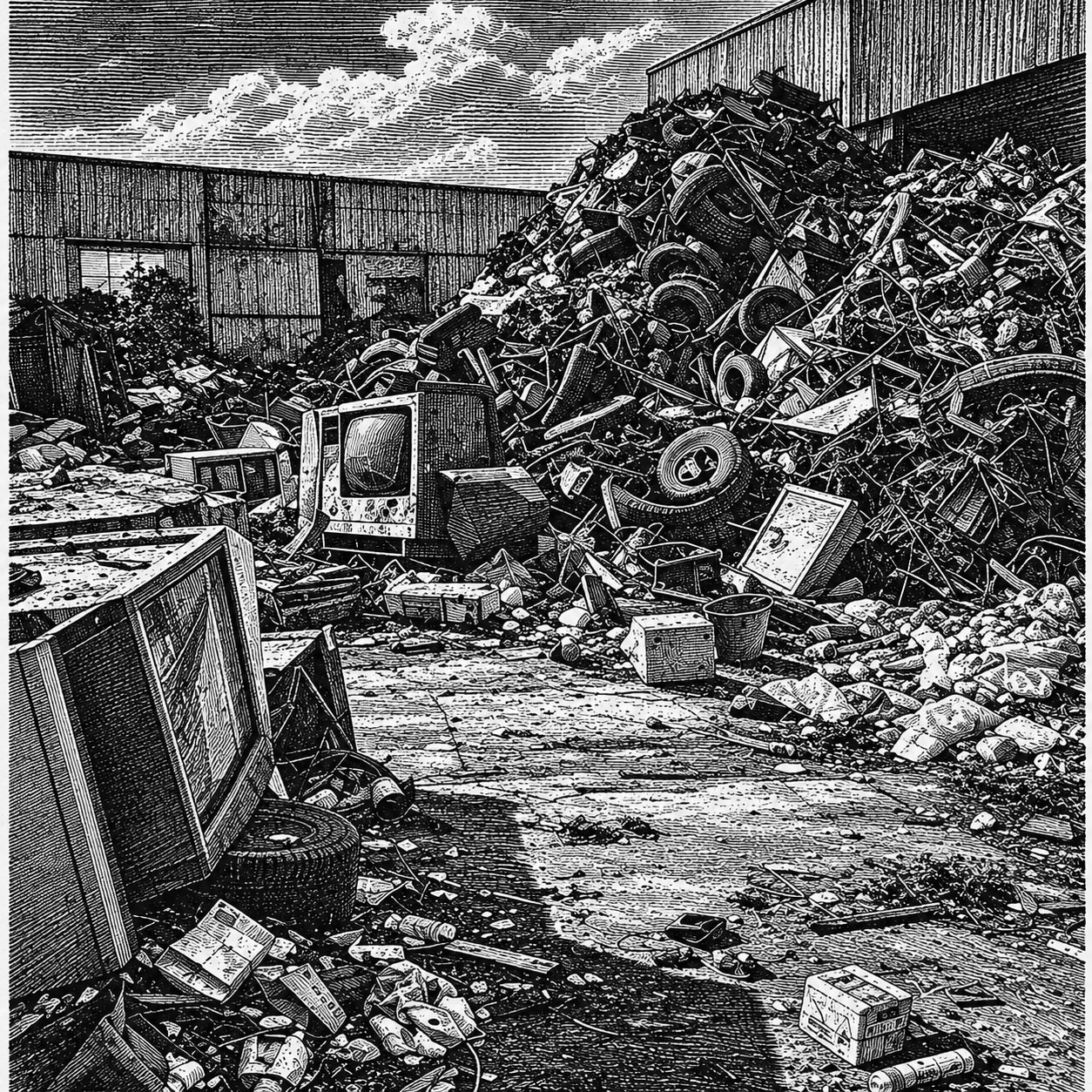
Jefferson County says it spends millions of dollars each year picking up litter and removing illegal trash piles along roads, money it says could otherwise support pothole repairs and paving. The county also warns that dumped waste harms waterways and the environment.
Statewide records document a longstanding problem with illegally discarded tires. In its report covering October 2022 through September 2024, the Alabama Department of Environmental Management said more than 10.3 million scrap tires had been removed from illegal stockpiles or unauthorized disposal sites since the state’s scrap tire program began. That is a cumulative total, not a count of tires removed during the two-year reporting period.
During that reporting period, the department conducted 134 inspections and assessments of unauthorized scrap tire accumulation sites and assessed approximately $104,005 in penalties connected with remediation requirements.
The report also lists a fiscal 2024 cleanup at 1100 Dugan Ave. in Jefferson County involving 6,573 passenger-tire equivalents. The $72,790.20 contract covered a combined unauthorized solid waste dump and scrap tire site. Passenger-tire equivalents are a standardized measure of tire quantities, rather than necessarily a count of individual tires.
ADEM investigates complaints about illegal solid waste disposal and takes enforcement action when necessary. The Alabama Rivers Alliance also maintains a public reporting tool for uncontrolled or illegal dumpsites and urges residents to notify ADEM and local authorities.
The Oct. 17 collection will accept automotive fluids, motor oil, gasoline, batteries, household cleaners, aerosols, pesticides, herbicides, fertilizers, pool chemicals, paints, solvents, stains and related products. Other accepted materials include fire extinguishers, gas cylinders, light bulbs and tubes, smoke alarms and mercury-containing items such as thermometers and thermostats.
Tires must be off their rims, with a limit of eight. Accepted recyclables include rinsed aluminum cans, glass bottles and jars of all colors, and plastics labeled No. 1 or No. 2.
Asbestos, explosives, medical waste, PCBs, radioactive materials and unidentified materials will not be accepted. Paper submitted for shredding should not include binders, clips or wet paper.
Residents should sort materials by category before arriving. The EPA advises keeping chemicals in their original labeled containers and never mixing leftover products, which can react, ignite or explode. Corroding containers require special handling, and residents should contact local hazardous materials officials or their fire department for instructions.
Questions about the collection or accepted materials can be directed to 205-325-8741. Illegal dumping can be reported to Jefferson County at 205-325-5321, option 6. Within Birmingham city limits, the county directs residents to call 311; residents of other municipalities should contact their city or town hall.