
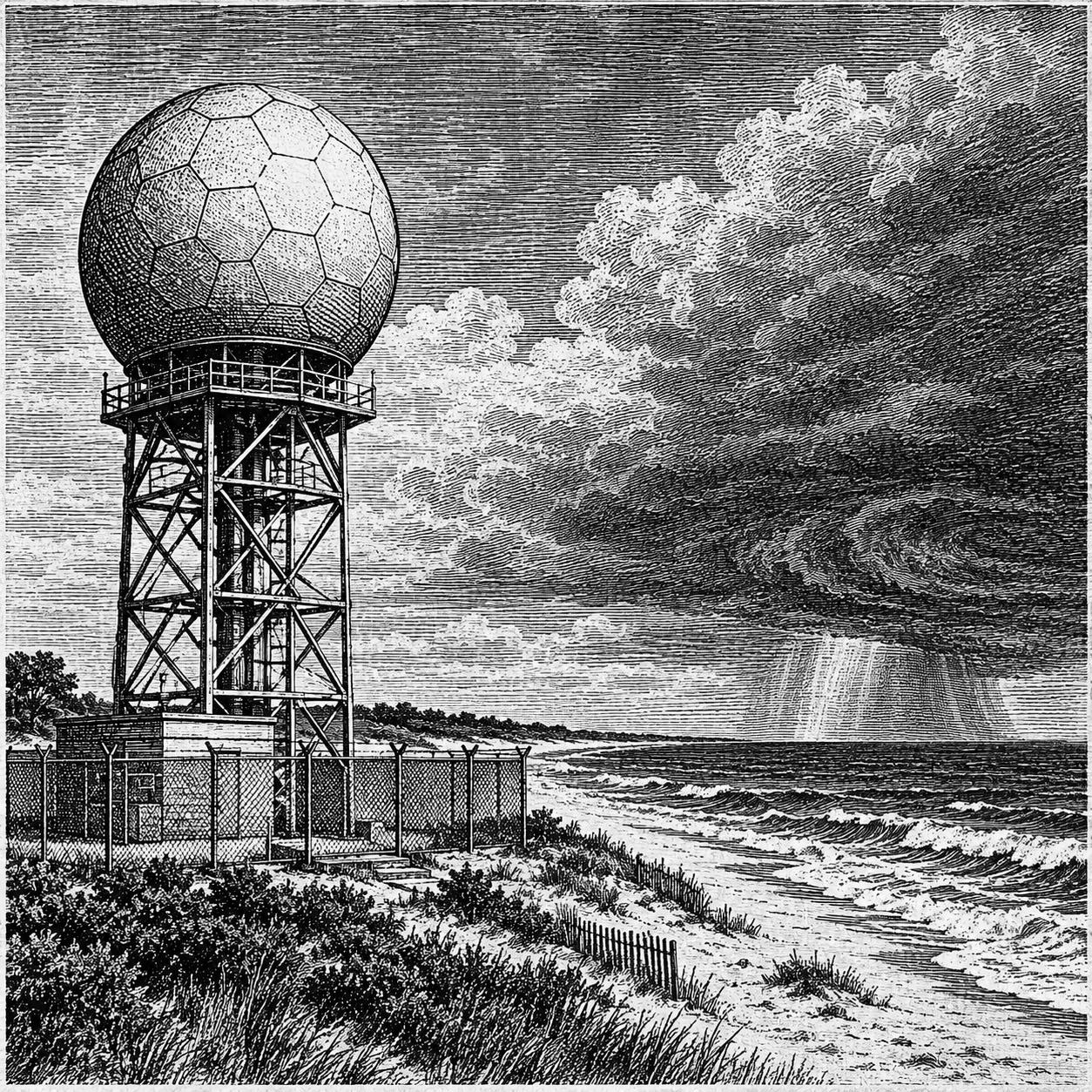
MOBILE, Ala. — A communications outage that has disrupted public weather-radar data across the Gulf Coast remained unresolved Sunday, leaving south Alabama residents without reliable access to radar imagery as heavy rain and flash-flooding concerns continued.
The National Weather Service Mobile/Pensacola office said radar data from the Mobile site, known as KMOB, and the Eglin Air Force Base site in the Florida Panhandle, known as KEVX, remained unavailable until further notice.
The outage is not believed to involve a failure of the radar equipment itself. Instead, it has interrupted the delivery of radar data to the public, affecting what residents can see on weather websites and mobile applications.
Alabama Emergency Management Agency meteorologist Jim Stefkovich said no radar data had reached external customers or the public for more than 24 hours from New Orleans to Mobile to Tallahassee, Florida. The outage includes radar sites at Mobile, Fort Rucker, Eglin Air Force Base, Tallahassee and Moody Air Force Base in Georgia.
“There is currently no estimate as to when restoration will occur,” Stefkovich said in a Sunday weather update.
National Weather Service forecasters have continued to monitor conditions and issue watches and warnings. The weather service has access to at least some radar information internally, according to AL.com, but public radar displays remain affected.
The disruption comes as parts of south Alabama face continuing heavy rain and flooding concerns. A flood watch remains in effect for Mobile and Baldwin counties through midnight Monday, while a separate flood watch covers Geneva and Houston counties through 7 a.m. Monday.
The Alabama Emergency Management Agency said rain could fall at rates of 2 to 3 inches per hour in far south Alabama, increasing the risk of flash flooding. The National Weather Service has forecast additional rainfall through Monday, with the heaviest amounts expected closer to the coast.
The National Weather Service said watches and warnings are not expected to be affected by the radar-data outage. Residents are urged to use multiple methods to receive weather alerts, including NOAA Weather Radio, local emergency notifications and trusted forecast sources.