
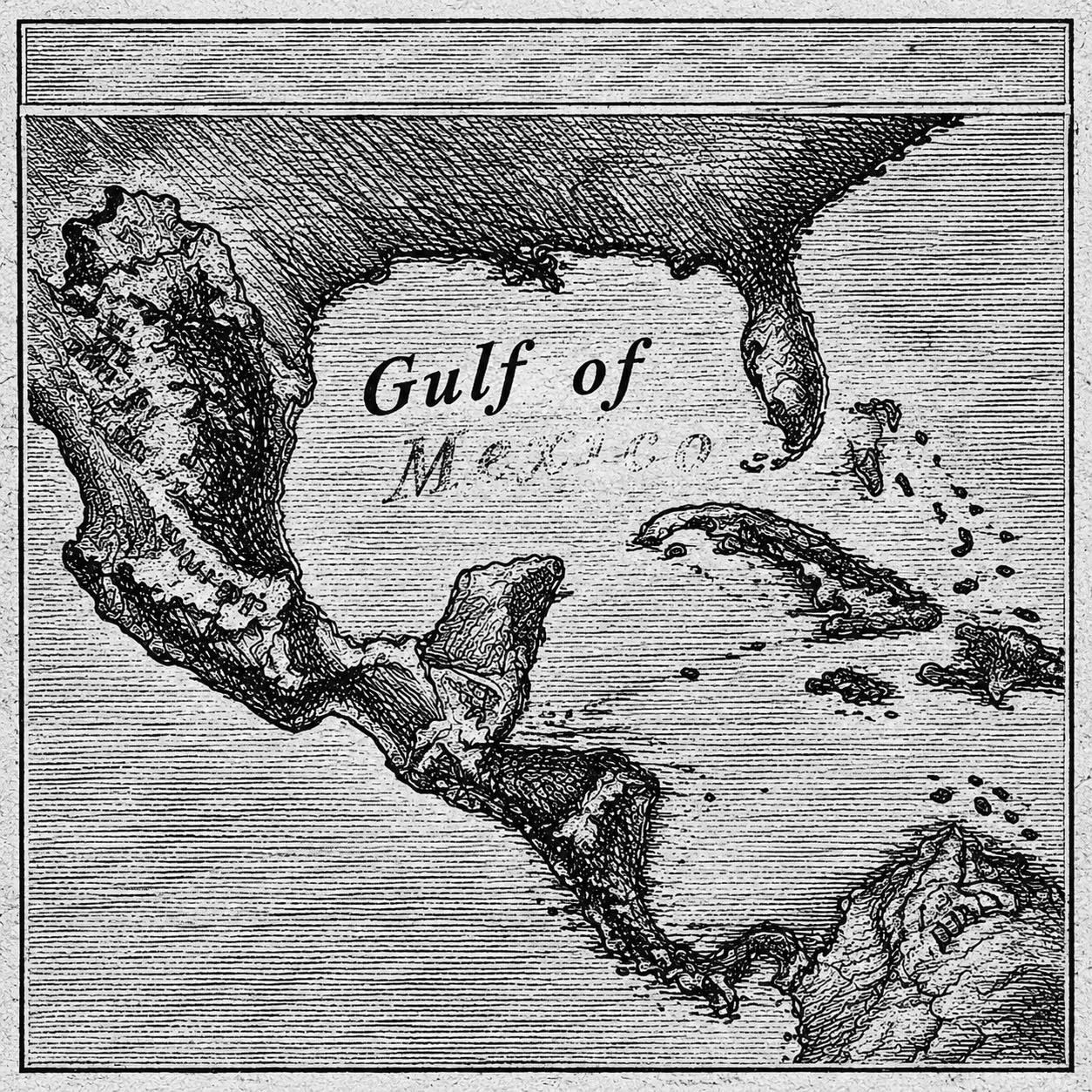
BIRMINGHAM, Ala. — Birmingham public radio station WBHM says it will be required beginning Thursday to use “Gulf of America” in place of “Gulf of Mexico,” an outcome station leaders say puts a state-imposed political label into the work of an independent newsroom.
The requirement stems from Alabama’s Gulf of America Act, signed by Gov. Kay Ivey this year after the Republican-controlled Legislature approved the measure. The law directs state and local entities, along with their employees, to refer to the body of water bordering Alabama as the “Gulf of America” beginning Oct. 1.
WBHM Executive Director and General Manager Will Dahlberg said in a letter to the station’s listeners that the mandate reaches the newsroom because WBHM is licensed to the University of Alabama at Birmingham and its employees are state employees.
“Journalistic independence is foundational to a news organization,” Dahlberg wrote. “It’s a key part of how we maintain your trust. This law threatens that independence. It also puts us at odds with our partners at NPR, the Associated Press, and others who will continue to use ‘Gulf of Mexico.’”
The dispute is an unusually direct illustration of how a politically charged state law can affect a newsroom at a public institution. The statute does not simply instruct Alabama agencies to revise official forms or maps. It requires state and local entities and their employees to use “Gulf of America” in new maps, documents, educational materials, websites, official communications and other resources. It also calls on agencies to make reasonable efforts to update existing resources where practical.
The law makes a limited exception allowing public K-12 schools and public colleges to use “Gulf of Mexico” in historical instruction when reasonable. It does not create a similar newsroom exception for public broadcasters, despite the traditional separation between university administration and editorial decisions made by journalists.
Dahlberg said WBHM employees are expected to follow the same state laws, rules and guidelines as other UAB departments. He wrote that the measure includes no stated enforcement mechanism or fines, but that state agencies are reasonably expected to carry out and enforce it.
“In short, our team will be expected to use ‘Gulf of America’ in place of ‘Gulf of Mexico’ starting on Oct. 1,” Dahlberg wrote.
Dahlberg also warned that departures from the requirement could expose employees to discipline or termination and could affect WBHM’s relationship with and financial support from UAB.
WBHM is a listener-supported public radio service licensed to UAB and governed by the University of Alabama System Board of Trustees. The station began broadcasting in 1976 and describes its mission as providing noncommercial public broadcasting and educational telecommunications services throughout Alabama. It is an NPR member station and was Alabama’s second NPR affiliate.
The conflict comes after a broader campaign by President Donald Trump and Republican officials to replace the centuries-old “Gulf of Mexico” name with “Gulf of America.” Trump directed the federal government to use the new name after returning to office, and Republican-controlled states, including Alabama, moved to adopt the term in their own official records.
The dispute over the name has also involved the White House and The Associated Press. The Trump administration restricted AP access to certain White House events after the wire service declined to revise its style guidance to use “Gulf of America” exclusively, according to the Alabama Reflector. The AP has continued to use “Gulf of Mexico,” while noting Trump’s preferred name where relevant.
The Alabama House and Senate approved the state measure after a contentious legislative process. The Senate passed the bill 26-5 in April after Republicans invoked cloture, cutting off further debate during Democratic opposition. The bill was sponsored by Rep. David Standridge, R-Hayden.
The enacted measure says entities do not have to update existing materials if doing so would impose an operational or financial burden. But it expressly requires future state and local communications to use “Gulf of America,” language broad enough that WBHM says it encompasses the language used by its journalists.
For public-radio listeners, the dispute is about more than a name on a map. It raises the question of whether a state government can force a newsroom at a public university to adopt political language that differs from the terminology used by national news organizations and the broader international community.
Public broadcasting has long been a target of conservative political attacks, including repeated efforts to reduce or eliminate federal support for the Corporation for Public Broadcasting, NPR and PBS. Critics often accuse public media of ideological bias, while public-media leaders argue that politically imposed limits on newsroom language pose a greater risk to independent journalism than disagreement over individual coverage decisions.
WBHM’s situation puts that conflict in a local context. The station can continue reporting on the coast, climate, hurricanes, fisheries, tourism, ports and marine life, but its journalists now face a state requirement to use a government-mandated term in their own reporting.
Dahlberg said he does not envy UAB and other state institutions navigating the politics surrounding the mandate. He also told listeners he plans to step down in October. Stephen Murray, UAB’s executive director of business operations, is expected to assume his duties, according to Dahlberg’s letter.