
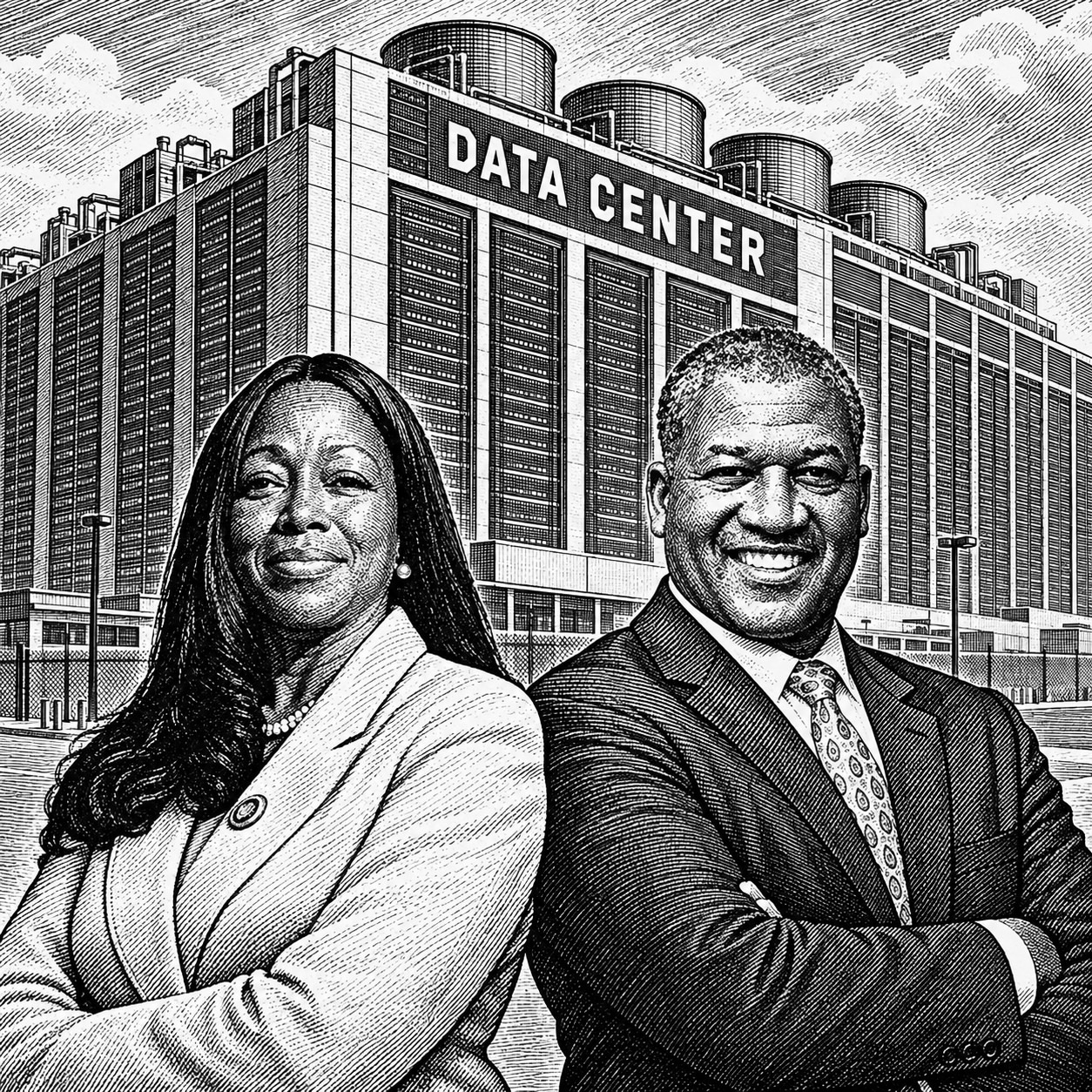
BESSEMER, Ala. — Bessemer Mayor Kenneth Gulley, a four-term incumbent who backed the city’s controversial Project Marvel data center development, lost his bid for a fifth term Tuesday as voters chose former state lawmaker and City Council member Louise Alexander to lead the city.
Alexander received 2,376 votes, or 54.53%, in Tuesday’s mayoral runoff, while Gulley received 1,981 votes, or 45.47%. The 395-vote margin reversed the outcome of the Aug. 25 general election, when Gulley led Alexander 45.11% to 41% but failed to clear the majority threshold needed to avoid a runoff.
The mayoral runoff drew 4,357 votes in all — a strikingly small number for a city with 17,547 registered voters. That total is equal to about one-fourth of the city’s registered electorate, although final turnout figures were not immediately available. Bessemer’s Aug. 25 municipal election drew about 3,800 voters, or 22% of registered voters, according to published election results.
Gulley’s defeat came after an election season dominated by Project Marvel, a proposed hyperscale data center complex that supporters describe as a major economic-development opportunity and opponents have cast as an opaque, land-intensive industrial project with uncertain effects on water, power infrastructure and nearby communities.
The campus is planned for about 1,600 acres in the Bessemer area after the City Council approved rezoning roughly 900 additional acres in April. The proposal calls for 18 buildings totaling about 4.5 million square feet — enough floor space to equal roughly 78 football fields, based on the standard 57,600-square-foot field including end zones.
Earlier reporting by WBHM described the original project concept as a campus with 18 structures, each about the size of a Walmart Supercenter. The proposal’s scale makes it the largest Alabama data center project based on planned square footage.
The project is valued at about $14.5 billion, placing it among the largest private investments proposed in Alabama history. It initially was associated with Logistic Land Investment LLC, a company owned by Atlanta-based TPA Group, before QTS Data Centers confirmed in July that it was pursuing the Bessemer campus. QTS is a Kansas-based data center company.
QTS has said Project Marvel could support thousands of construction, contractor and long-term operations jobs, though its public statement did not provide a permanent-job total. AL.com reported that QTS projects 350 permanent operational jobs after the campus is completed — a large figure for a data center but still far below the number of construction jobs expected during development.
The project’s utility needs have been central to the dispute. Early plans cited by AL.com anticipated up to 2 million gallons of water a day, an amount the Warrior River Water Authority said it could not supply without substantial upgrades. After QTS emerged as the project’s operator, the company’s plan was amended to list up to 130,000 gallons of municipal water per day. QTS has also said it intends to use a closed-loop cooling system that would not consume water for cooling once the campus is operating.
Large data centers house thousands of servers that run continuously and generate significant heat. The planned Bessemer campus has been described as having up to 1,200 megawatts of capacity — equivalent to 1.2 gigawatts — illustrating why electricity demand, grid upgrades and the possibility of higher utility costs have been recurring concerns among residents and critics.
Gulley drew criticism after it became public that he, the city attorney and the mayor’s chief of staff signed a nondisclosure agreement tied to Project Marvel. The agreement took effect in February 2025 and was set to run through February 2027, according to reporting by WBRC. The city released the agreement in July after environmental groups raised transparency concerns and threatened litigation.
The controversy also contributed to a broader municipal-election shakeup. In the August election, voters defeated or forced into runoffs several council incumbents during a campaign in which Project Marvel became a dominant issue. Councilwoman Donna Thigpen, who voted against the project, won reelection outright with 64.91% of the vote, while Councilman Kelvin Eades, who supported the project, defeated incumbent Teco Stephens in District 5.
Bessemer’s vote unfolded amid a growing national backlash against the rapid construction of data centers used for artificial intelligence and cloud computing. Communities from the Midwest to the West Coast have raised objections involving land use, water consumption, power demand, tax incentives, noise and whether local residents will benefit proportionately from projects that can occupy hundreds or thousands of acres while creating comparatively few permanent jobs.
A Reuters/Ipsos survey cited by Brookings found that 64% of respondents did not consider rapid data-center construction a good thing, while 77% said they worried the facilities could increase electricity rates. The political resistance has crossed party lines and become a factor in local and state elections, even as developers and public officials emphasize tax revenue, construction employment and the need for infrastructure to support AI and online services.
Alexander’s win does not by itself halt Project Marvel. The necessary rezoning has been approved, QTS has confirmed that it is pursuing the project, and the company has described the development as a long-term investment expected to generate tax revenue and economic opportunity. But the election gives Bessemer a new mayor after one of the state’s most consequential development fights — and puts the next phase of the enormous campus under closer political scrutiny.