
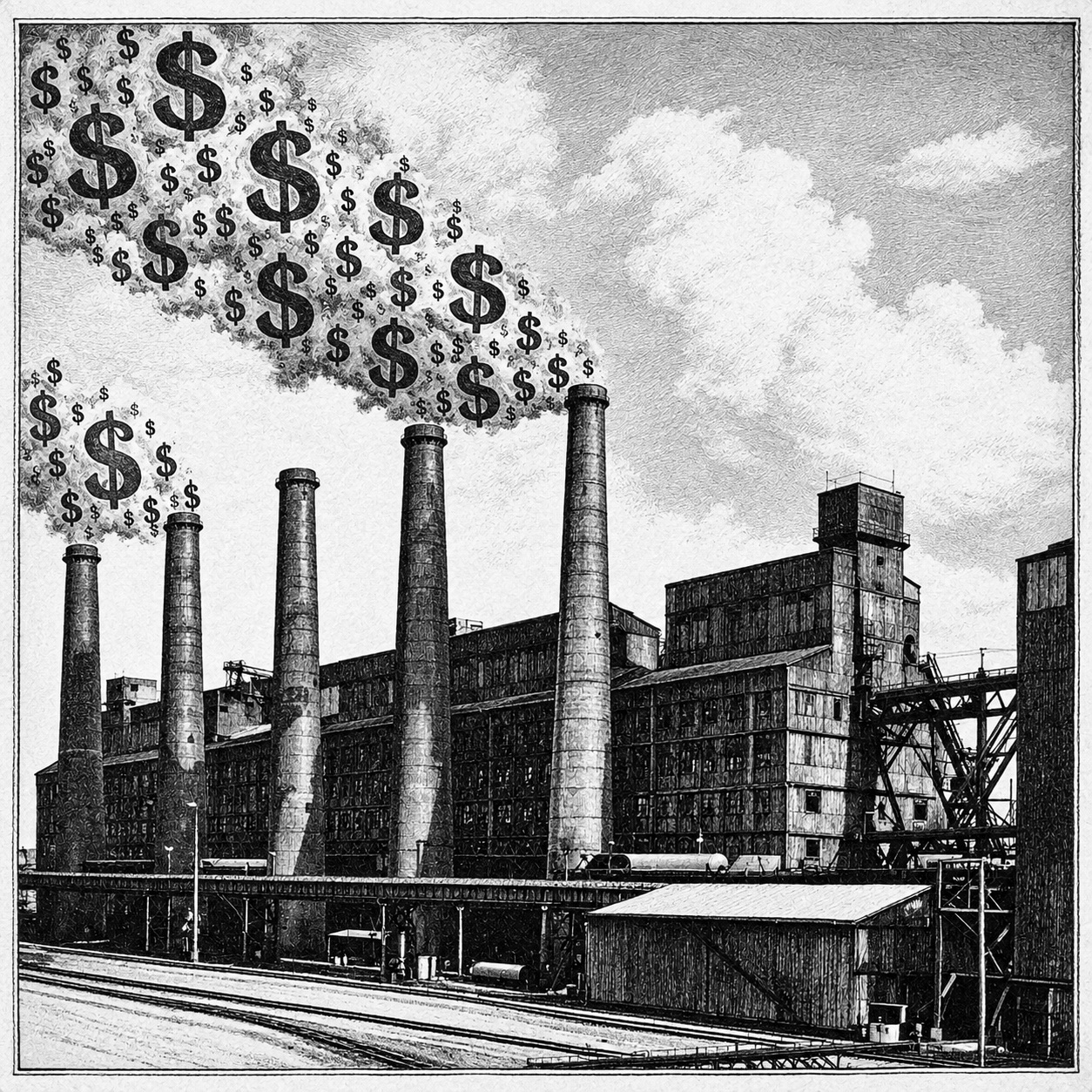
FAIRFIELD, Ala. — U.S. Steel has broken ground on a $475 million expansion at its Fairfield Tubular Operations, a project expected to bring hundreds of construction jobs and about 250 permanent positions to a city seeking durable economic momentum after years of industrial decline.
The project, announced in June and marked with a ceremonial groundbreaking Monday, will add a quench-and-temper line at the Fairfield plant. The heat-treatment process improves steel’s strength and durability, allowing the company to make pipe products for oil and gas drilling and production operations in major domestic energy basins, including the Permian, Eagle Ford, Haynesville and Marcellus regions.
U.S. Steel said the facility is expected to reach full production in 2029. It received its final required air permit Sept. 15, and the company said initial construction began in July.
The company projects the investment will create about 600 construction jobs at peak and roughly 250 permanent jobs. About 220 of the permanent positions are expected to be union-represented, while about 30 are expected to be nonunion jobs, according to the company.
For Fairfield, the most immediate benefit will come from the construction period, when contractors, equipment providers, suppliers and workers could generate additional business for restaurants, stores and service companies in the western Jefferson County area. The longer-term benefit, however, rests on whether residents can secure and retain the permanent manufacturing jobs, which typically provide more stable earnings than temporary construction work.
The new line will be part of a broader modernization of Fairfield Tubular Operations that includes a $75 million Premium Thread Line announced in 2025, a training facility, warehouse and upgraded employee changing areas. The two announced projects total about $550 million. The Premium Thread Line is intended to expand the plant’s ability to thread steel pipe and tubing products.
U.S. Steel has said the investments will allow the company to produce more high-performance, heat-treated tubular products in-house rather than relying on outside processing. That could make the Fairfield operation more competitive in the oil country tubular goods market and provide a stronger business case for maintaining production and employment at the site over time.
The plant’s continued operation matters in Fairfield, a city of fewer than 10,000 people where manufacturing has long shaped the local economy and identity. U.S. Steel’s prior Fairfield Works operations once employed thousands of workers before major portions of the plant were idled more than a decade ago. The company’s current tubular operation is far smaller than the former integrated steel complex, but it remains one of the area’s most consequential industrial employers.
U.S. Steel reported in May that its Alabama operations generated an estimated $536.2 million in statewide economic impact during fiscal year 2024, supported 1,963 jobs and produced $12.4 million in state and local tax revenue. The company said it also worked with 328 Alabama-based suppliers. The figures were from an economic-impact study conducted for U.S. Steel by Parker Strategy Group and cover the company’s Alabama operations broadly, rather than Fairfield alone.
The new Fairfield jobs could benefit the city through workers’ spending, potential home purchases and the need for nearby businesses and services. But the project’s effect on Fairfield’s municipal budget is less certain. U.S. Steel has not publicly detailed how much of the project’s tax revenue would flow directly to the city, whether it received any local tax incentives or how many of the permanent jobs are expected to be filled by Fairfield residents.
Those questions are significant because a large industrial investment does not automatically translate into an equally large increase in city revenue. The scale of Fairfield’s direct benefit will depend on property-tax arrangements, sales-tax activity, local purchasing and whether the company and contractors hire locally.
U.S. Steel said the investment reflects rising demand for heat-treated tubular products used by domestic energy producers. The company described the new line as part of an effort to strengthen its position in the oil and gas market while expanding its capacity to produce specialized pipe products internally.
The company’s investment also comes after Nippon Steel’s acquisition of U.S. Steel, which has been accompanied by a broader commitment to capital spending at U.S. Steel facilities. U.S. Steel said its Fairfield investment is intended to strengthen manufacturing capacity in Alabama and support its tubular-products business.
For Fairfield, the clearest measure of the project’s success may not be the $475 million price tag, but whether the work produces long-term jobs, local workforce training and sustained business activity after construction crews leave and the plant begins operating in 2029.