
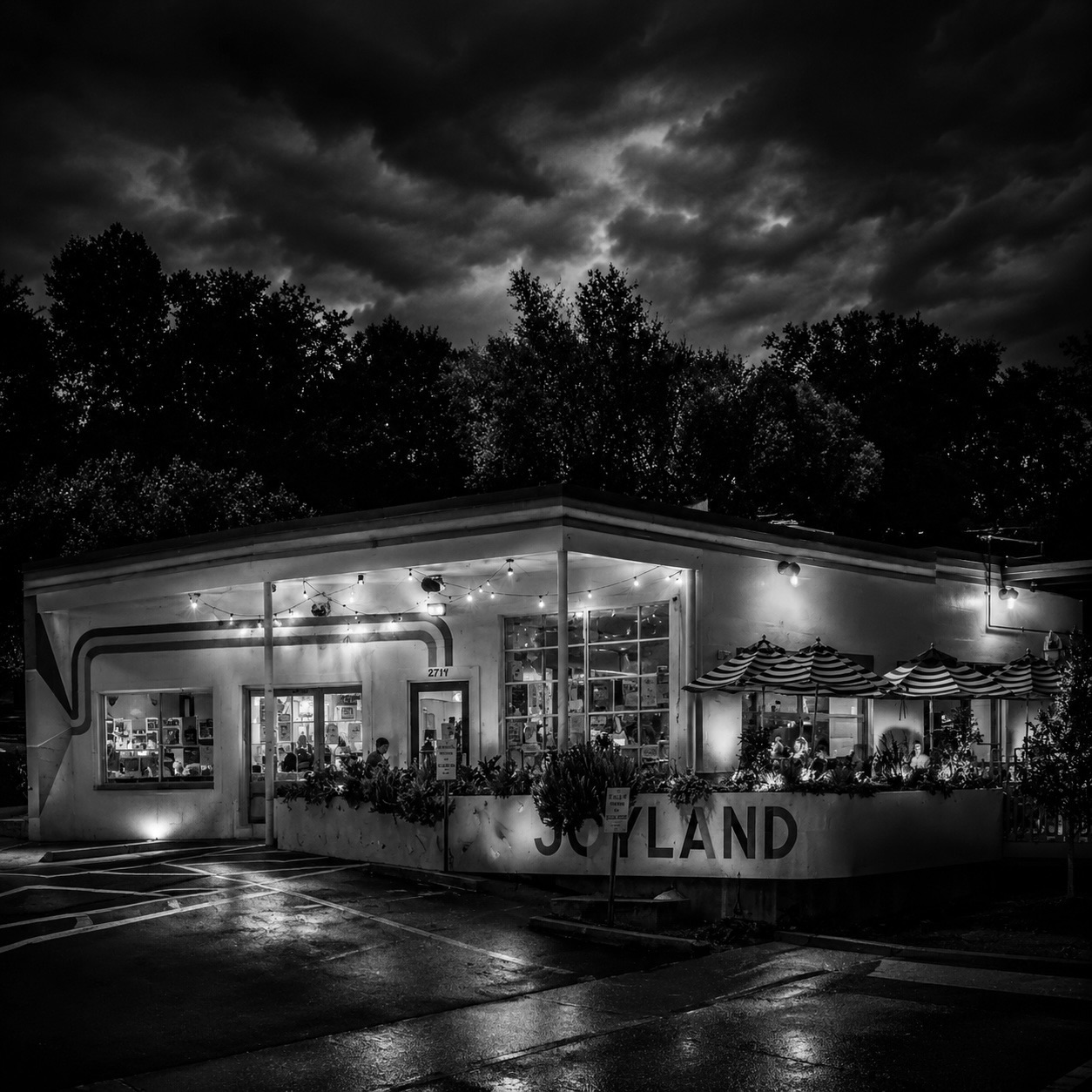
BIRMINGHAM, Ala. — Joyland’s permanent closure in Birmingham’s Avondale neighborhood has ended another short-lived restaurant run at a location best known for its years as Bottletree Café, the influential music venue that helped establish Avondale as a destination for live entertainment and independent businesses.
Joyland closed after service Sunday, Aug. 2, nearly two years after opening at 3719 Third Ave. South. The Birmingham location was the final operating restaurant in the Nashville-based fast-casual chain founded by chef Sean Brock.
The restaurant’s general manager, Jake Blankenship, announced the closure in a social media post.
“Joyland closed its doors permanently after service last night,” Blankenship said, thanking customers for spending time at the restaurant and supporting its staff. “We are just as sad to see it go as you are,” he said.
Joyland opened Aug. 15, 2024, serving burgers, fried chicken sandwiches, fries and other elevated fast-food offerings. Brock partnered on the Birmingham location with Nick Pihakis of Birmingham-based Pihakis Restaurant Group and Paul Mishkin of Southall Farm in Franklin, Tennessee.
The closure came amid financial and legal problems involving Pihakis Restaurant Group, which has faced lawsuits involving unpaid liens and bills at several of its locations. Several Pihakis-affiliated restaurants, including Hero Doughnuts and Rodney Scott’s BBQ locations, closed earlier in 2026.
Joyland’s two Nashville restaurants closed in July. Its Charleston, South Carolina, location closed in February, meaning the Birmingham closure marked the end of the Joyland brand.
For many Birmingham residents, the restaurant’s closing is notable not only because of Joyland’s popularity but also because of the building’s history.
Before becoming home to a succession of restaurants, the building was Bottletree Café, a restaurant, bar, nightclub and community arts center founded by Merrilee and Brad Challiss in 2006. Bottletree became known for its eclectic food, art exhibitions, comedy shows, independent films and live music.
The venue hosted performers including Band of Horses, the Alabama Shakes, Fleet Foxes, TV on the Radio, St. Vincent, Yelawolf and St. Paul & the Broken Bones. Its intimate setting and wide-ranging bookings made Bottletree one of Birmingham’s best-known independent music venues.
Bottletree announced in March 2015 that it would close at the end of that month. Its final concert, Bottletree Farewell Fest, was held March 28, 2015, followed by the café’s final brunch the next day.
The property later became a location for Rodney Scott’s Whole Hog BBQ. The restaurant opened there in 2019, but the Avondale location closed Nov. 27, 2023, after about four years in business. Rodney Scott’s continued operating at its Homewood location at the time.
Joyland followed in 2024, opening in the former Rodney Scott’s space after the barbecue restaurant’s closure. Its run lasted less than two years.
That history has led some residents to wonder whether the site itself has become difficult for restaurants, although the available reporting does not establish a single cause for the closures.
The turnover at the former Bottletree location reflects broader changes in Avondale’s restaurant and bar scene.
In a 2024 report on business closings in the neighborhood, AL.com described a series of restaurant and business shakeups and raised concerns about whether Avondale’s revitalization could be sustained. Birmingham City Council President Darrell O’Quinn, whose district includes Avondale, said he had heard that landlords were significantly increasing lease rates.
Bob Vines, a commercial real estate developer involved in Avondale’s redevelopment, described the closings as part of a normal business cycle. The report also noted that restaurants were still recovering from the effects of the COVID-19 pandemic, while property owners were attempting to recoup revenue lost during the pandemic.
Those pressures provide possible context for the neighborhood’s restaurant turnover, but they do not explain every closure at the former Bottletree site.
Bottletree operated under a distinct business model that combined food, nightlife, music and community events. Rodney Scott’s and Joyland, by contrast, were restaurant concepts tied to larger hospitality groups and nationally known chefs. Their shorter tenures may reflect the challenges of operating restaurants in a competitive neighborhood rather than a direct continuation of Bottletree’s history.
For now, the building’s next chapter remains unknown. What is clear is that the former Bottletree space has housed three prominent food-and-entertainment concepts since the music venue closed — and none has matched Bottletree’s longevity or cultural impact.