
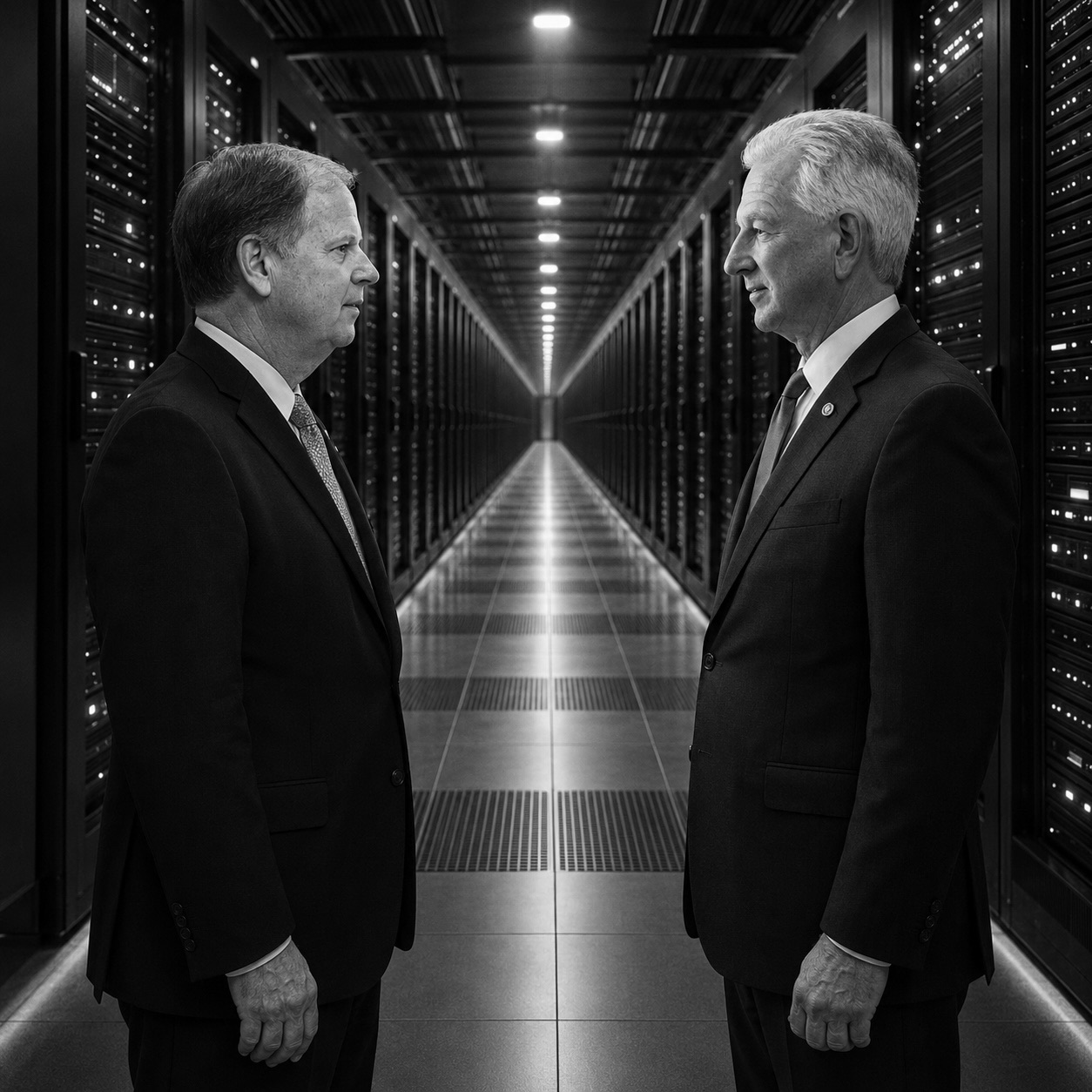
BIRMINGHAM, Ala. — Former U.S. Sen. Doug Jones is pressing for an “immediate moratorium” on new data centers in Alabama, arguing that residents are being kept in the dark about projects that will reshape local power and water use, while U.S. Sen. Tommy Tuberville is embracing the facilities as a cornerstone of the state’s economic future and artificial intelligence boom.
The debate comes as global technology companies plan unprecedented spending on AI-related infrastructure, with major firms projected to invest hundreds of billions of dollars in data centers and related hardware in 2026 alone. Those sprawling campuses house the specialized computers that train and run large AI models, but they also demand huge amounts of electricity and, in many cases, water for cooling.
Jones, the Democratic nominee for governor, says Alabama is moving too fast without statewide standards or meaningful local input. He has characterized opposition to data centers as coming from Alabama families who discovered massive projects in their communities only after key decisions had already been made, not from foreign adversaries. Jones has argued that Alabama should halt approvals until it has a real statewide plan for how and where such facilities will be built.
Jones has proposed banning nondisclosure agreements between developers and local governments and requiring independently funded community advisory boards for each approved project, with resources to monitor environmental and quality-of-life impacts. He argues those steps are necessary to ensure residents understand how much power and water new facilities will use and what benefits will flow back to the communities that host them.
Tuberville, the Republican governor’s candidate, has taken almost the opposite stance. He has repeatedly touted data centers as a way to bring new tax revenue to schools, law enforcement and public services, and has warned that pushing back too hard could cost Alabama major investments from tech and cloud computing firms. Tuberville has suggested opposition to data center projects is being fueled by foreign influence, a claim Jones has sharply criticized.
Nationally, not every data center is dedicated to artificial intelligence. Many traditional facilities still host a mix of everyday cloud services and enterprise workloads, while the largest new builds are increasingly optimized for machine learning “training” — the process of building and updating large models — which is the most resource-intensive phase. Once a major AI model is trained, the software itself can be copied and run on far smaller systems, including consumer-level hardware, without the same continuous power draw.
That dynamic has fueled questions about how much of the current data center construction boom is aimed at expanding AI’s capabilities versus serving more conventional needs such as video streaming, gaming and general cloud computing. Skeptics, including some energy analysts and technology investors, question whether such rapid expansion is sustainable and warn of a possible “AI infrastructure bubble” if revenue fails to keep pace with capital spending.
Major players such as Google and Amazon say they have clear strategies, pointing to AI-powered search, cloud services, logistics tools and other products that they argue justify the investment. Other companies are pursuing business models built around licensing advanced language models and related services, often in partnership with larger cloud providers. Still, some market-watchers believe portions of the AI buildout may eventually be scaled back if promised returns do not materialize.
In Alabama, the political stakes are immediate. Residents in communities targeted for data centers have raised concerns about noise, traffic, rezoning and strain on already limited power grids, and have complained about learning of projects only after land deals and utility plans were well underway. Jones is attempting to channel that unease into a statewide policy reset, while Tuberville casts the projects as a rare opportunity for Alabama to sit near the center of a global technology wave.
The race could determine whether the state tightens guardrails around data center development or continues to compete aggressively for projects, even as the long-term payoff of the AI infrastructure boom remains uncertain.