
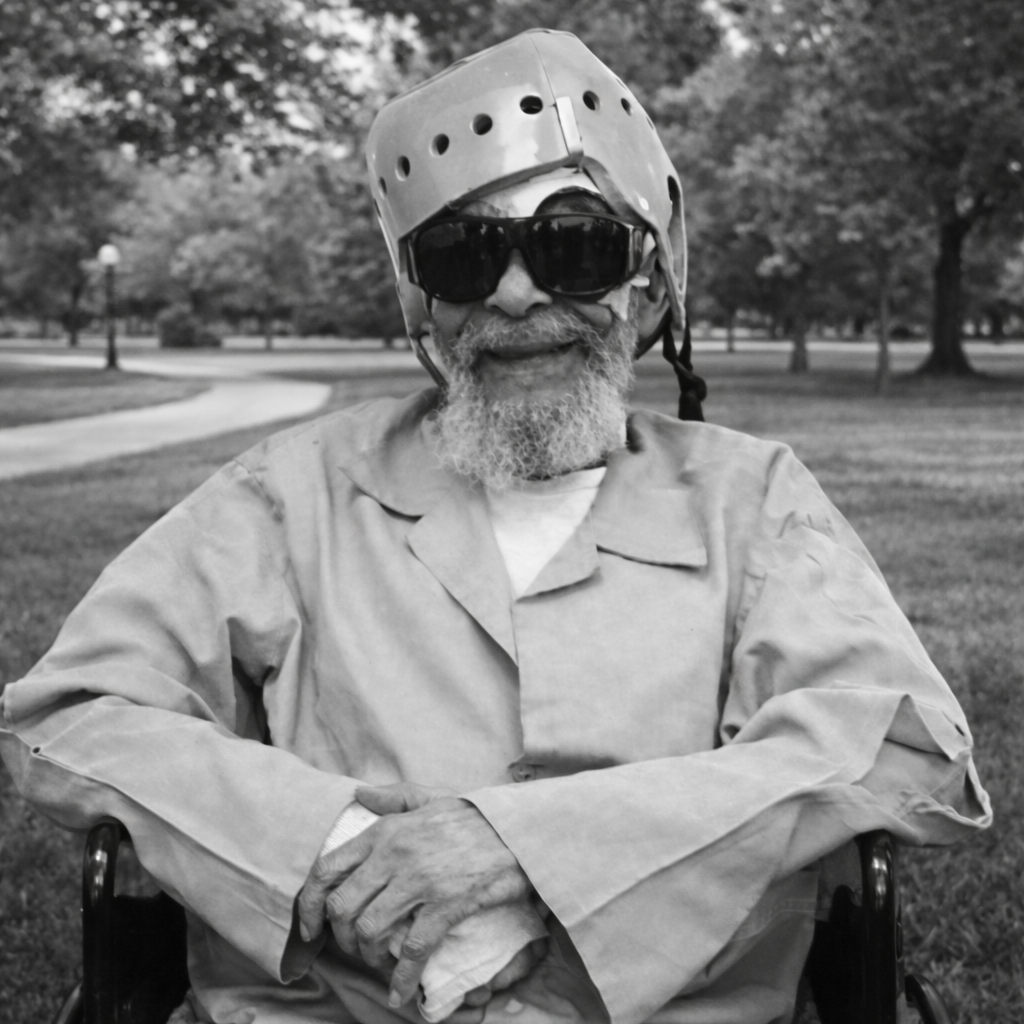
MONTGOMERY, Ala. — Alabama is scheduled to put 75-year-old Charles “Sonny” Burton to death Thursday for a 1991 killing during a Talladega auto parts store robbery, even though the state acknowledges he did not fire the fatal shot.
Burton’s pending execution by nitrogen gas has drawn a broad coalition of jurors, faith leaders, civil rights advocates and even the victim’s daughter into an eleventh-hour push for clemency, arguing that Alabama is poised to execute an elderly, disabled man who never killed anyone while the man who pulled the trigger died serving a life-without-parole sentence.
Burton was one of six men involved in the Aug. 16, 1991, robbery of an AutoZone store in Talladega, where 34-year-old Army veteran and father of four Doug Battle walked in as the holdup was ending.
According to trial testimony and later court records, Burton had already exited the store when co-defendant Derrick DeBruce shot Battle after an exchange of words; prosecutors never disputed that DeBruce was the gunman.
Both men were initially sentenced to death, but a federal court later overturned DeBruce’s death sentence because of ineffective assistance of counsel, and he was resentenced to life without parole before dying in prison.
Burton, convicted as the alleged ringleader under Alabama’s felony murder doctrine, remained on death row, making him the only member of the group now facing execution.
Under Alabama law, accomplices in certain felonies can be convicted of capital murder and sentenced to death if a killing occurs, even if they did not plan, intend or carry out the homicide.
Critics say Burton’s case exposes how that doctrine can stretch capital punishment far beyond the “worst of the worst,” since the state moved the actual shooter off death row while insisting the non-shooter must die.
The Equal Justice Initiative, a Montgomery-based legal nonprofit, calls Burton’s case “an extreme outlier,” noting that he “did not kill anyone, did not order anyone to kill anyone, and did not even see anyone killed.”
Advocates argue that executing Burton while sparing the triggerman undermines public confidence in Alabama’s justice system and highlights longstanding concerns about arbitrariness, race and excessive punishment in the state’s capital regime.
Burton’s lawyers have filed a clemency petition urging Gov. Kay Ivey to commute his sentence to life without parole, pointing to his lesser role, his age and health and the changed outcome for DeBruce.
A broad coalition — including civil rights groups, clergy and national anti-death-penalty organizations — has echoed that call in letters and public statements in recent weeks.
Several jurors from Burton’s 1992 trial now say they would not oppose or would favor a life-without-parole sentence instead of death, and at least three have written Ivey asking her to spare his life.
Battle’s daughter has also questioned the planned execution, writing to the governor to ask “how does it legally make sense?” to execute the man who didn’t pull the trigger while the shooter served life in prison.
Ivey, a Republican who has long defended Alabama’s use of capital punishment, has so far signaled she has no plans to grant clemency, though she retains the authority to do so until the execution is carried out.
Her office has emphasized that a Talladega County jury unanimously recommended a death sentence in 1992 and that state and federal courts have upheld Burton’s conviction and sentence through decades of appeals.
If the execution proceeds, Burton will be killed by nitrogen hypoxia at Holman Correctional Facility in Atmore, the same untested method Alabama used in two controversial executions beginning in 2024.
The technique involves strapping a mask over the prisoner’s face and replacing breathable air with pure nitrogen, causing death by oxygen deprivation; human rights advocates have condemned it as experimental and inhumane.
Burton, who has spent more than three decades on death row, is frail and in failing health, according to his legal team and family.
He suffers from severe rheumatoid arthritis, primarily uses a wheelchair and must wear a state-issued helmet because of frequent falls, raising additional concerns among opponents about subjecting a disabled elderly prisoner to a novel method of execution.
For many death penalty critics in Alabama and beyond, Burton’s case has become a symbol of what they view as a broken system: one that can send people to death row who neither killed nor intended to kill, while largely closing the door to mercy.
They point to advances in exonerations nationwide, the rarity of clemency in capital cases and the state’s willingness to experiment with new execution protocols as evidence that the system’s mistakes and excesses fall hardest on the people with the least power.
Unless Ivey or the courts intervene, Burton is scheduled to be executed Thursday night.
His supporters say that outcome would not only end the life of a man who never pulled the trigger but also cement Alabama’s reputation as a state willing to carry out the ultimate punishment even in some of its least compelling cases for death.