
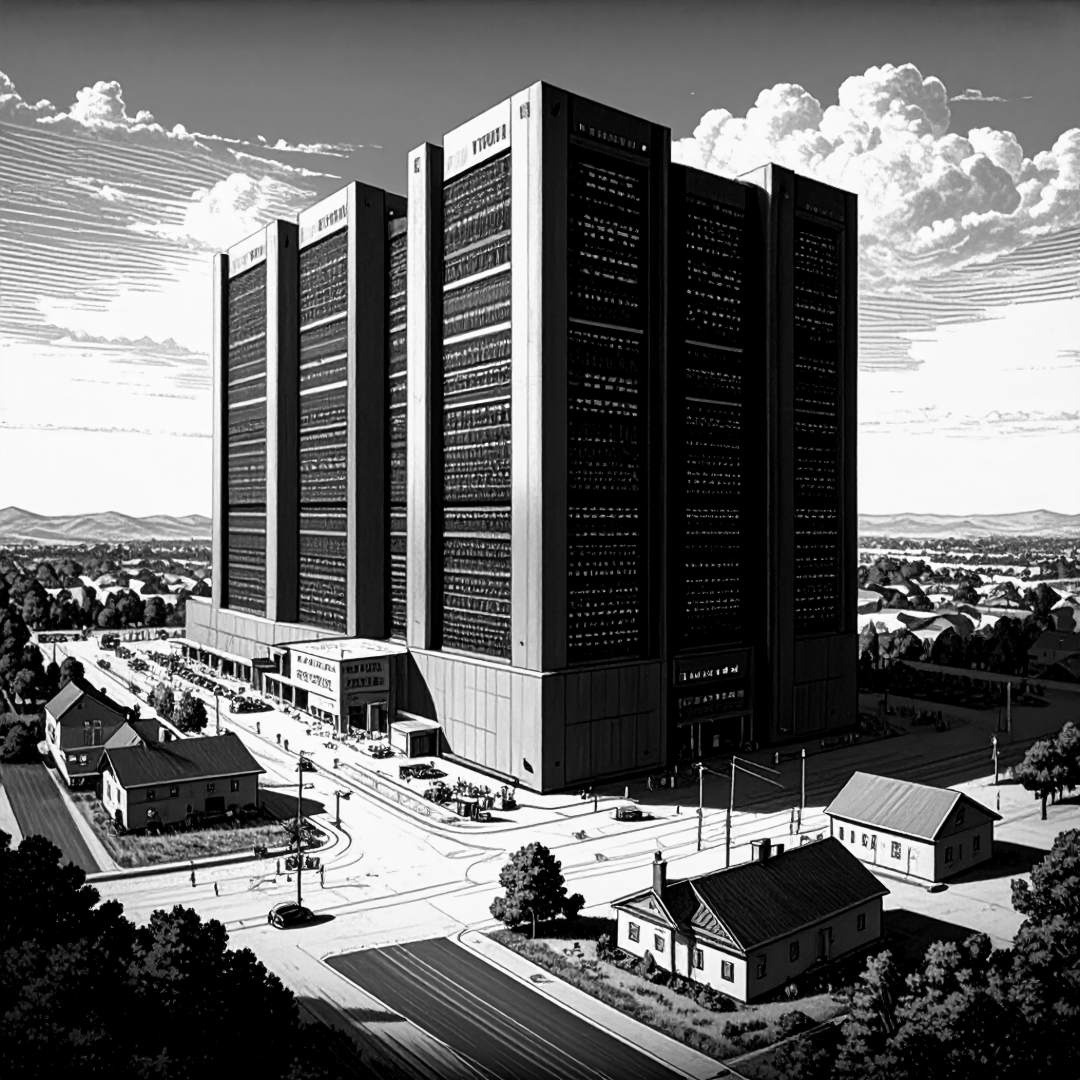
BIRMINGHAM, Ala. — A Dutch artificial intelligence infrastructure company is moving ahead with plans for a sprawling “AI factory” along Lakeshore Parkway in Birmingham, even as city leaders hit pause on new large-scale data centers amid growing environmental and neighborhood concerns.
Nebius Group N.V., an Amsterdam-based firm that develops AI computing infrastructure, has filed permits to redevelop the former Regions Lakeshore Operations Center at 201 Milan Parkway into a 75- to 80-acre, 300-megawatt data center campus marketed as the Birmingham AI Factory or BHM01. The project would sit in the Oxmoor Valley corridor near apartment complexes, offices and the future Greater Birmingham Humane Society campus, placing one of the region’s largest technology infrastructure investments directly next to existing neighborhoods.
Nebius is headquartered in Amsterdam and positions itself as an AI infrastructure and innovation company, part of a broader push to build a distributed network of large-scale data centers across the United States. A detailed industry analysis describes the Birmingham campus as one of several “AI factory” sites Nebius is developing to spread grid risk and locate massive computing loads in regions with the right mix of power capacity, industrial zoning and regulatory clarity.
The company has acquired roughly 75 to 80 acres in Oxmoor Valley, paying an estimated premium for the land in part because the former bank operations campus already ties into robust transmission infrastructure and sits in a corporate park that can be shifted toward industrial-scale energy use. Analysts say Birmingham offers industrial-grade transmission lines, space for a 300-megawatt buildout and a regulated relationship with Alabama Power that can support a flat, around-the-clock load.
In effect, Birmingham becomes Nebius’ Southeastern anchor in a tri-regional AI grid strategy that also includes facilities in the Northeast and Midwest, allowing the company to route computing and power demand across different weather, regulatory and congestion zones.
The selection of Birmingham — and specifically the Oxmoor Valley corridor — appears to hinge on three advantages: grid capacity, contiguous land and permissive zoning that already allows data centers. A 300-megawatt AI campus requires more power than many cities can spare, and the Oxmoor Valley site sits near industrial-grade transmission infrastructure that can be expanded through an on-site substation and switchyard.
The former Regions campus also offers a large, continuous parcel inside city limits, giving Nebius proximity to Birmingham’s labor market and higher-education institutions while still tying into regional energy infrastructure. The property lies within Oxmoor Corporate Park, which city officials and the company say is zoned to accommodate data centers and associated power equipment, even though residents emphasize that it has historically been marketed as an office-oriented corporate setting rather than heavy industry.
For Birmingham leaders, the project holds out the promise of transforming a vacated financial operations hub into a high-tax-yield technology campus at a time when many cities are competing for AI and cloud-computing investments.
On March 2, the Birmingham City Council approved a six-month moratorium on new large data centers, halting applications for future facilities while the city studies impacts on energy use, water consumption, noise and neighborhood compatibility. City officials have framed the measure as a temporary suspension, not a permanent ban, intended to give planners time to update zoning and environmental standards for an industry that can consume enormous resources while offering relatively few permanent jobs.
However, Nebius appears positioned to move forward despite the pause. The company submitted its building permit application on Jan. 29, weeks before the moratorium vote, and city leaders have said projects already in the pipeline will not be affected by the new restrictions. The Birmingham AI Factory is therefore proceeding under existing rules even as those rules are being reconsidered — a point that has sharpened tensions among neighbors who say the city is acknowledging problems that this project will help create.
A vote by the Birmingham Zoning Board of Adjustment on a variance for Nebius’ planned substation and related equipment was recently delayed after residents packed a public hearing to object to the development’s impacts on nearby homes and the humane society’s future campus.
Residents of Oxmoor Valley and nearby streets argue that a 300-megawatt AI factory does not belong this close to apartments, single-family homes and animal facilities, even if the underlying zoning technically allows it.
Key worries include noise from industrial chillers, cooling systems and backup generators that could run for testing or during grid problems and echo across the valley. Residents also point to the constant, high-volume power draw needed to keep AI servers running, which some fear could strain the grid or drive up rates over time despite company assurances. Others highlight water use for cooling and the cumulative impact of multiple data centers on regional water supplies and air quality. The Greater Birmingham Humane Society has raised alarms about how noise and vibration from the campus could stress animals and complicate operations at its future facility next door.
Birmingham is not alone in confronting these questions. Cities from Atlanta to Denver and data-center-heavy counties in Virginia and Arizona have adopted temporary pauses or new rules as they grapple with the energy and land-use footprint of rapidly expanding AI and cloud infrastructure. Environmental advocates in Alabama have urged local governments to consider cumulative impacts on air and water, not just individual projects, when deciding how and where the industry can grow.
Nebius and supporters of the project point to substantial economic benefits if the AI factory moves forward. Company representatives and local officials have cited tens of millions of dollars in annual tax revenue and “hundreds” of construction jobs tied to the buildout, arguing that the project could become one of Birmingham’s largest single technology infrastructure investments.
ABC 33/40 reported that Nebius has promoted an estimated $80 million in revenue for Birmingham City and Jefferson County schools over the life of the project, as well as potential partnerships with historically Black colleges and community colleges such as Miles College and Lawson State for workforce development and training. A Birmingham Times report quoted a project representative describing the facility as an opportunity for the city’s schools, emphasizing that tax flows could reach “tens of millions of dollars annually.”
Nebius has also told residents that Alabama Power customers will not see rate increases because the company plans to build its own substation and related infrastructure to handle the heavy load, effectively treating the Birmingham campus as an industrial-scale customer embedded in the regional grid.
For supporters, the project is a bet that Birmingham can claim a place in the global AI economy rather than watch other cities capture investment, even if the permanent headcount at the facility remains modest compared with traditional factories or office towers.
The fact that a European-headquartered company is leading one of Alabama’s biggest AI infrastructure projects underscores how global the AI supply chain has become, even as public debates often focus on U.S. and Chinese players. Nebius’ move into Birmingham reflects a broader trend in which multinational data-center operators spread their facilities across continents and regions to hedge regulatory risk and chase available power, often landing in communities that have not previously seen themselves as technology hubs.
For Birmingham, the decision now before zoning officials and, indirectly, the City Council is whether the benefits of becoming a Southeastern anchor for AI outweigh the risks of hosting an industrial-scale computing complex next to neighborhoods that are already feeling the pressure of congestion and growth. City leaders say the six-month moratorium will produce clearer rules for the next wave of data-center proposals, but because Nebius arrived early, the Birmingham AI Factory may end up defining — and testing — whatever balance the city strikes between tech-driven development, environmental stewardship and quality of life in places like Oxmoor Valley.