
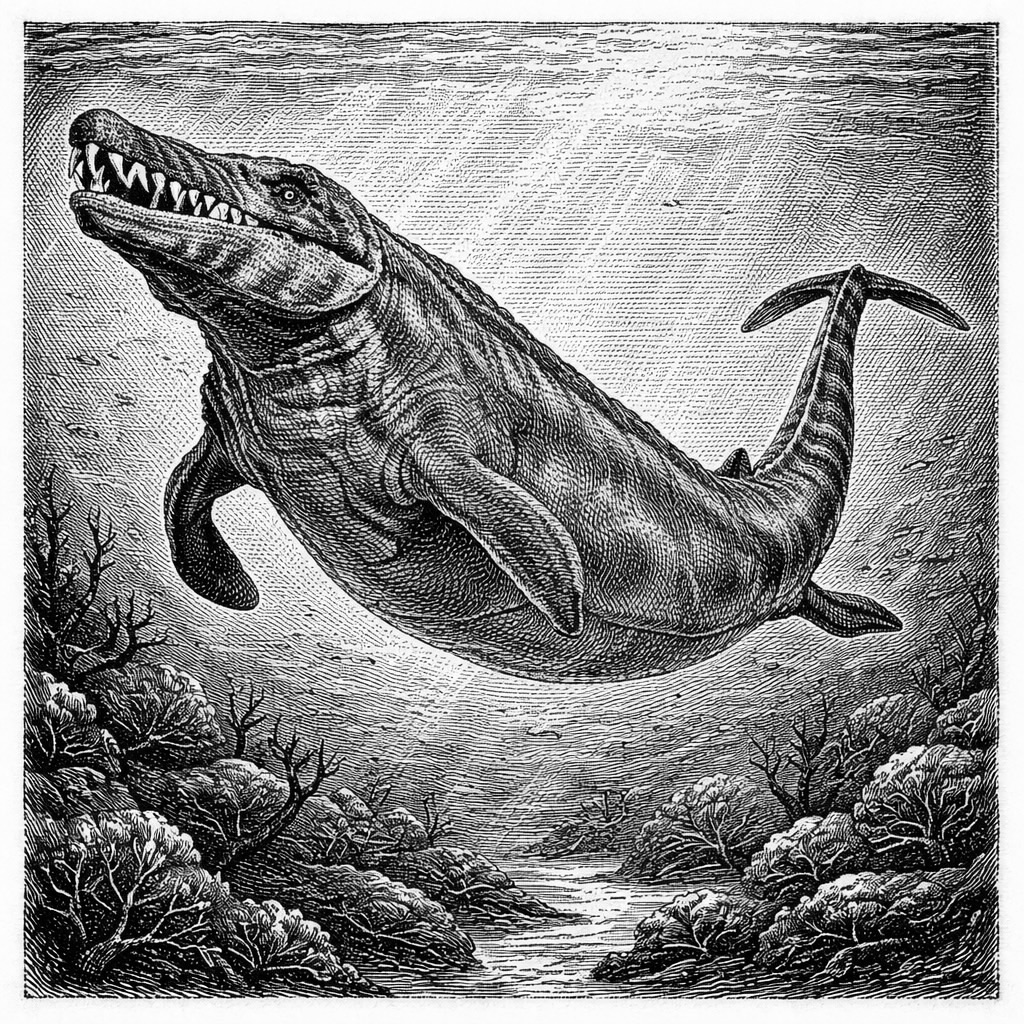
BIRMINGHAM, Ala. — A gigantic Basilosaurus skeleton with deep Alabama roots is now greeting visitors in the lobby of McWane Science Center, offering a larger‑than‑life welcome to downtown Birmingham’s family‑friendly science hub. The new mount showcases Alabama’s official state fossil as a soaring centerpiece and ties the Magic City to an ancient ocean that covered the state 30 to 40 million years ago.
Suspended overhead in the Grand Lobby, the replica whale stretches around 40 to 60 feet from head to tail, depending on how it’s measured, and is based on a nearly complete skeleton collected in Washington County in 1981 by the former Red Mountain Museum, now part of McWane’s collections. Beneath the cast, a 12‑foot display case holds real Basilosaurus bones, giving visitors a close‑up look at massive vertebrae said to be about the size of two stacked basketballs and a skull comparable to a small refrigerator.
Basilosaurus, whose name means “king lizard,” was originally mistaken for a giant reptile when it was described in the 1800s, but scientists later confirmed it as a toothed whale that lived long after non‑avian dinosaurs died out. Today it holds a special place in the state’s story as Alabama’s official fossil and one of the largest predators known from the region’s prehistoric seas. Alabama is considered one of the best places in the world to find Basilosaurus remains, with many fossils discovered in the southern and western parts of the state.
The new lobby centerpiece continues a long relationship between McWane and Alabama paleontology, dating back to the Red Mountain Museum’s work studying local fossils and helping lay the groundwork for the combined science center that opened downtown in the historic Loveman’s building. Support from McWane’s Archimedes Society helped fund the Basilosaurus project, with the museum describing the cast as a more than 60‑foot‑long toothed whale intended to hang in the Grand Lobby to greet every guest who walks through the doors.
Local lifestyle outlets have already begun steering families to the exhibit as a can’t‑miss stop on a Birmingham day trip, highlighting the fossil’s connection to downtown attractions and restaurants within walking distance. McWane lists the Basilosaurus in its lobby as free to view during regular hours, with the science center open Tuesday through Friday from 9 a.m. to 5 p.m., Saturdays from 10 a.m. to 5 p.m. and Sundays from noon to 5 p.m. at 200 19th St. N.
For Birmingham residents and visitors alike, the towering fossil offers a new way to see the city’s place in Earth’s history, from ancient oceans to the modern skyline just outside the museum’s front doors.