
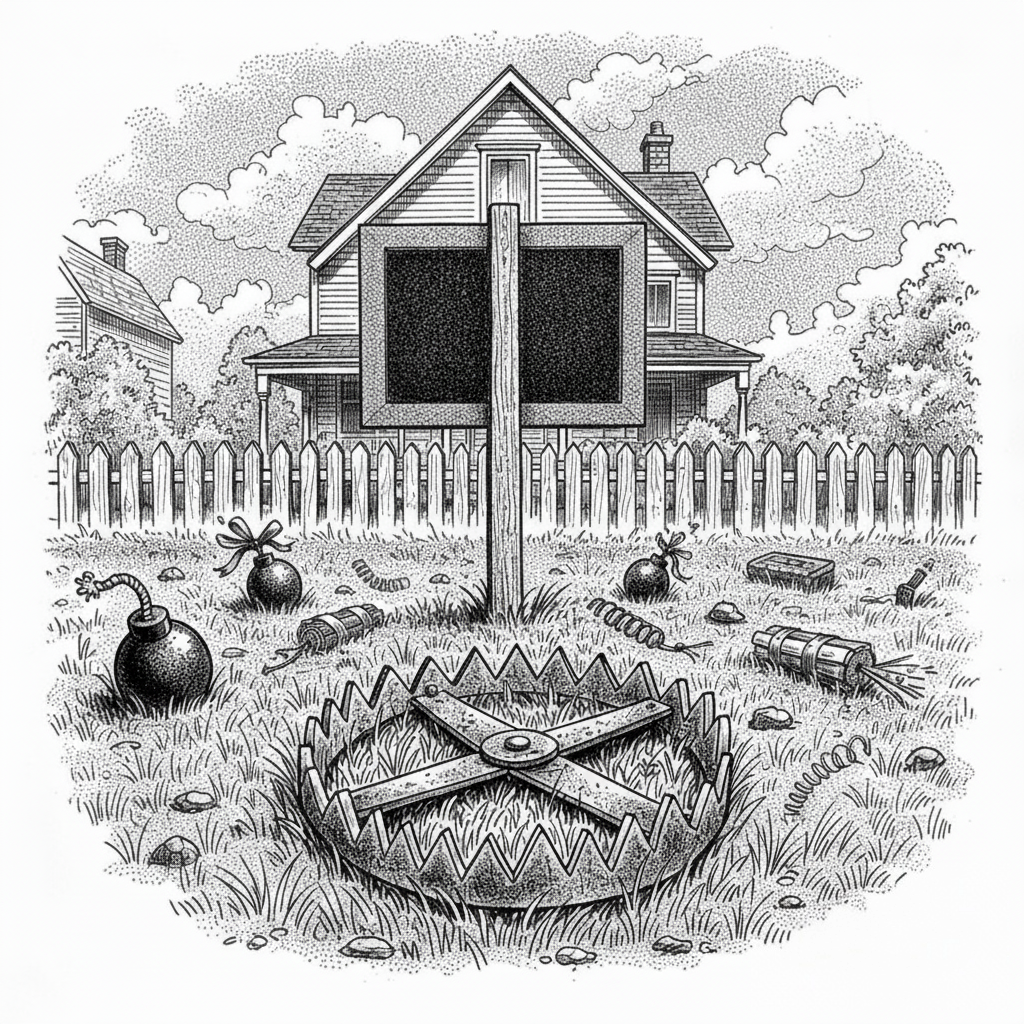
HELENA, Ala. — A months-long feud over an anti-Trump yard sign in Helena has left a 66-year-old man jailed on explosives and assault charges, turning a neighborhood dispute into a test of how far law enforcement will go when political speech collides with public safety concerns.
Jerry Lee Clarke, a Shelby County resident, is being held on a bond reported by supporters as roughly $400,000 after authorities say he planted commercial fireworks around an anti-Trump sign in his yard and later aimed a laser at law enforcement officers who responded. Activists and family members say the sign — mocking President Donald Trump with insults such as “How do you spell idiot? TRUMP” — had been repeatedly vandalized or targeted by angry callers before the confrontation escalated.
The sign, displayed on Clarke’s property along a busy road in the Helena area of Shelby County, criticized Trump in blunt language that drew complaints in the heavily conservative suburb, according to social media posts and local discussion threads. Clarke’s family and supporters say he contacted local authorities multiple times about threats and vandalism, but was urged instead to remove or tone down the display because it was “making people upset” and “making officers’ job harder.”
Videos and posts shared by Alabama Democrats and progressive groups portray Clarke as a longtime resident frustrated that his expression of anti-Trump views drew more scrutiny than those who tampered with his property. Conservative commenters, including some linked to Shelby County law enforcement social media, have described the display as “crazy” and focused on the alleged dangers created once fireworks and a laser were introduced.
At some point after the reported harassment began, Clarke obtained consumer-grade fireworks and placed them around or beneath the sign, partially hidden by pine straw or landscaping, according to online explainers. Supporters say the devices were bought over the counter at roadside fireworks stands and were intended as a noise and light deterrent under Clarke’s supervision, not as an unattended booby trap.
Investigators, however, have described the setup as improvised explosives or explosive weapons, and multiple felony counts stem from possession or placement of those devices near the sign, according to activists who have reviewed court information. Commenters familiar with Alabama law have noted that rigging any explosive device as a trap — even if labeled or monitored — can be prosecuted, while mere possession of consumer fireworks is legal in the state.
The dispute came to a head after neighbors or passersby reported the sign, the fireworks and Clarke’s behavior to authorities, prompting a response by the Shelby County Sheriff’s Office and Helena police. During one encounter, Clarke allegedly pointed a laser or laser pointer at officers, leading to additional charges that law enforcement supporters say involve intent to injure or blind.
No injuries other than to Clarke himself have been publicly reported, and no explosion reportedly caused property damage beyond the immediate area of his yard, according to community accounts. Critics have questioned why a non-injury incident involving over-the-counter fireworks drew a bond level they view as more consistent with high-level violent offenses.
Progressive groups, Alabama Democrats and civil liberties advocates have seized on Clarke’s case as an example of unequal enforcement when political speech targets Trump in deeply red parts of the state. Commenters in Democratic circles have circulated videos and fundraising appeals promoted by Clarke’s daughter, arguing that the bond is punitive and that prosecutors overstated the danger posed by fireworks commonly sold in Alabama.
Supporters have framed the case as a First Amendment issue compounded by what they describe as selective policing, pointing to years of toleration of pro-Trump flags and signs that use harsher language without attracting similar law enforcement attention. Others, including some who oppose Trump, say Clarke’s decision to mix pyrotechnics and a laser with a political dispute risks undermining broader efforts to defend dissent in conservative communities.
As of early January 2026, Clarke remained in the Shelby County Jail facing multiple felony counts tied to explosives or weapons violations and the alleged laser assault on officers, according to information shared by local activists and relatives. Some details of the case — including exact charges and potential sentencing ranges — have not yet been fully detailed in public court documents.
Civil-rights lawyers and activists following the case expect the legal battle to center on whether consumer fireworks under close supervision can be treated as criminal explosives, and whether Clarke’s conduct with the laser meets Alabama’s standard for assaulting or menacing a law enforcement officer. For now, the Helena man’s yard sign remains at the center of a local fight over where free expression ends and public-safety fears begin.