
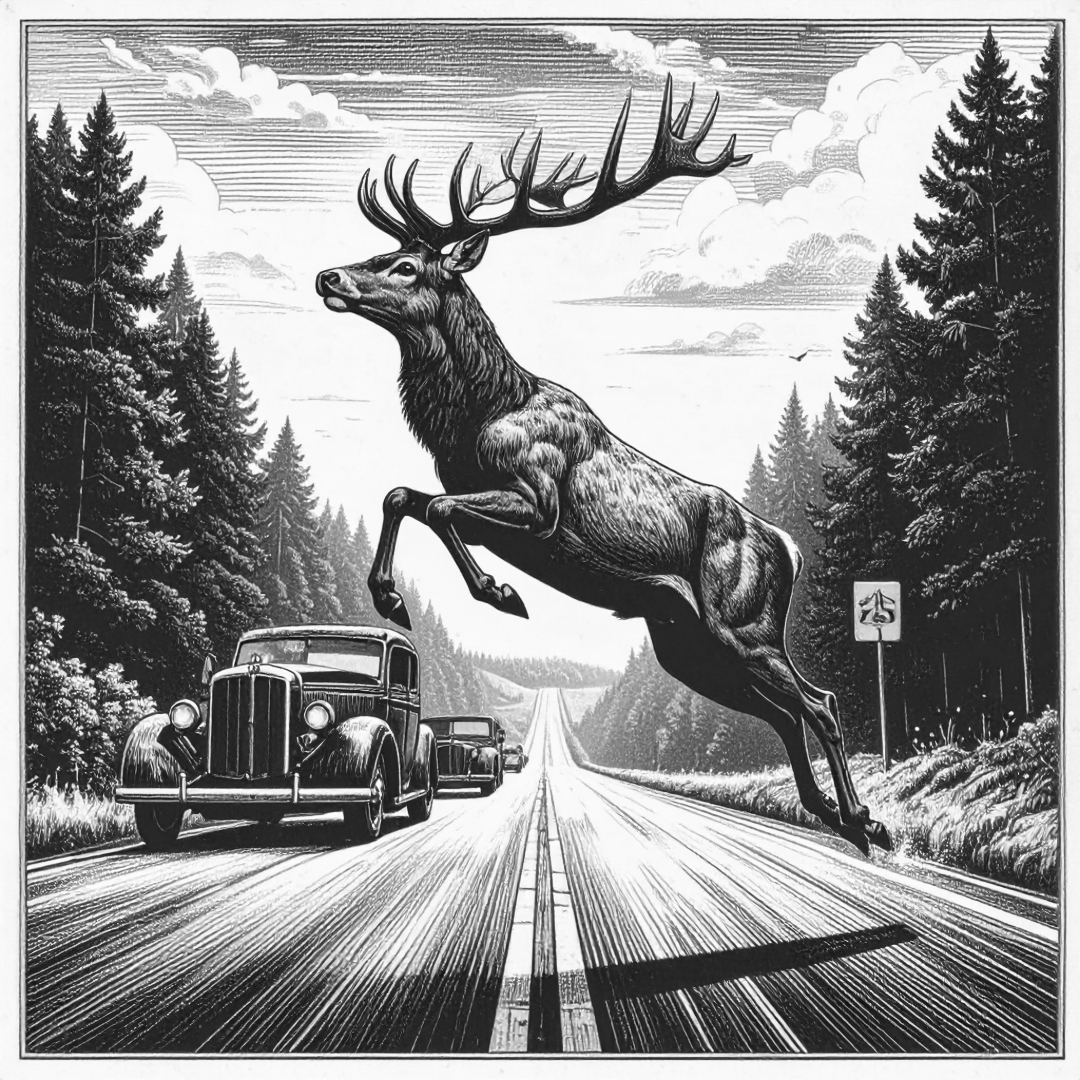
MONTGOMERY, Ala. — The Alabama Law Enforcement Agency is issuing a fresh warning to motorists as new data show vehicle-versus-deer crashes surging across the state during the fall and winter rut season. Troopers investigated 1,652 vehicle-versus-wildlife crashes in 2024, and ALEA officials say the numbers underline a dangerous pattern that peaks just as holiday traffic rises.
According to ALEA’s Highway Patrol Division, 1,243 of those crashes happened during the official fall and winter months, compared with just 409 crashes in the spring and summer. Monthly totals show collisions steadily climbing in the fall, then spiking to 328 crashes in January and 288 in December, even before counting cases handled only by local police.
The warning comes as national insurance data continue to place Alabama among the higher‑risk states for animal‑involved wrecks, with drivers facing roughly a 1 in 90–1 in 93 chance of a collision in a given year. By comparison, U.S. drivers overall face odds closer to 1 in 128 to 1 in 139, making Alabama’s risk significantly worse than the national average even though it is not in the very top tier of states.
State safety officials say the danger is driven largely by white‑tailed deer behavior, which changes sharply during mating season. Deer are more likely to move at dawn and dusk, travel in groups and dart unpredictably across rural, wooded roadways — exactly the conditions that dominate on many Alabama highways and county roads.
ALEA’s warning urges drivers to slow down, especially on two‑lane roads and near fields, forests and creek bottoms where deer often feed and travel. The agency also stresses that if a crash seems unavoidable, motorists should brake firmly, stay in their lane and avoid swerving into oncoming traffic or off the roadway, where rollovers and head‑on collisions can be more deadly than hitting the animal.
The risk extends well beyond rural communities, with crashes reported on interstates, state routes and suburban corridors around cities such as Birmingham, Huntsville, Mobile and Montgomery. Safety advocates note that the tall grass and tree lines along many Alabama rights‑of‑way can hide deer until they are already in the travel lane, giving drivers only a split second to react.
Nationally, State Farm estimates more than 1.8 million animal‑collision insurance claims were filed across the industry from mid‑2023 to mid‑2024, with deer making up the majority of those incidents. While West Virginia, Montana and several Upper Midwest states still rank as the most dangerous places for animal crashes, Alabama remains firmly in the high‑risk group, far above low‑odds states such as Nevada, Hawaii and Arizona.
In Alabama, transportation and safety agencies repeatedly remind drivers that the danger does not end with the close of hunting season. Officials say deer movement can remain elevated into late winter, and they are urging motorists to treat the next several months as a “critical season” for slowing down, buckling up and watching the ditches and medians for sudden movement.