
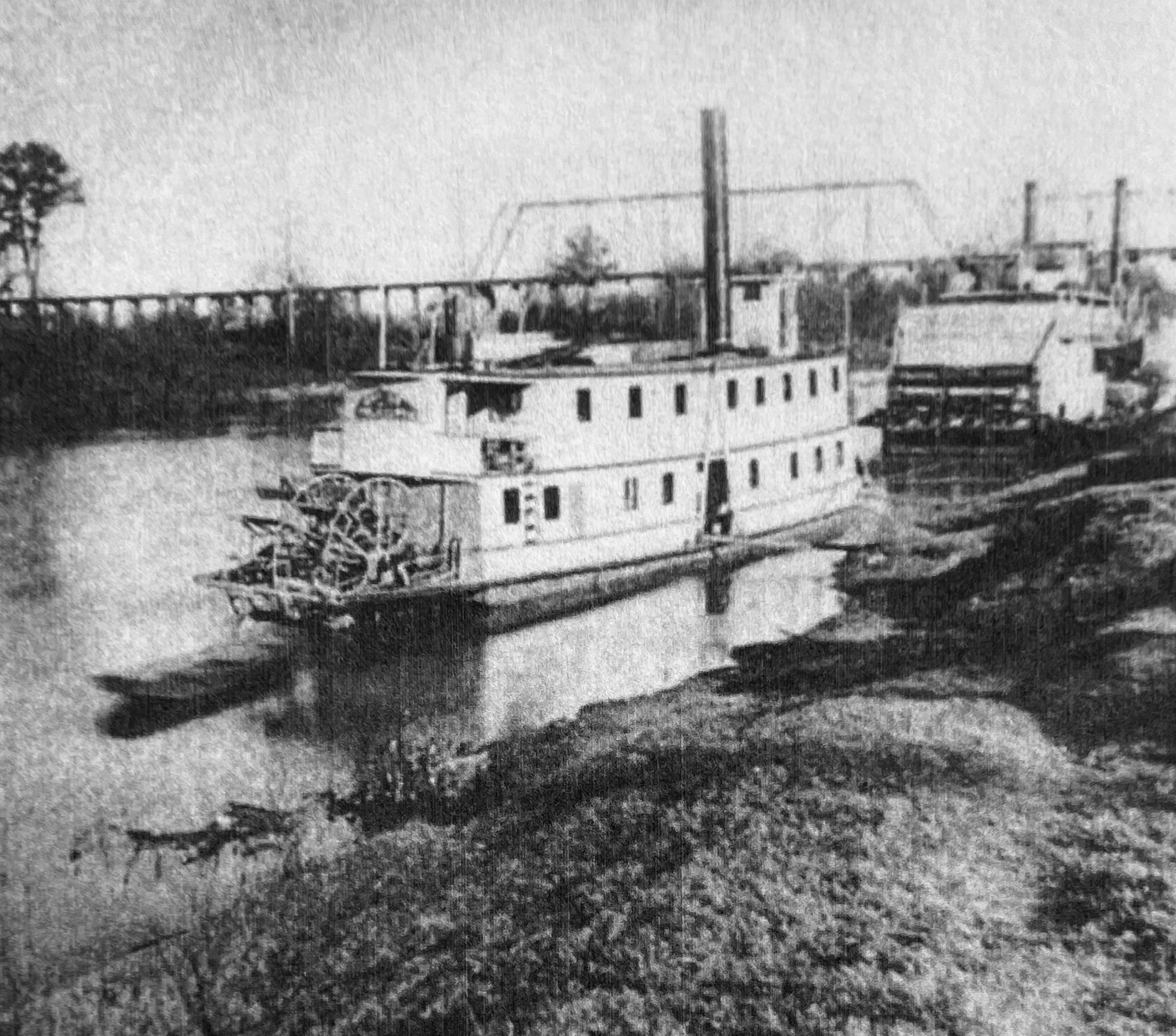
In the spring of 1905, a most peculiar sight appeared on Alabama’s Black Warrior River—a white steamboat called the Gopher, outfitted like a floating laboratory and carrying one Clarence Bloomfield Moore, a wealthy Philadelphia gentleman with an uncommon passion for ancient Indian mounds.
Moore had made his fortune in the family paper business, but he’d found his calling in archaeology. The Gopher was his ingenious solution to the problem of how to conduct scientific excavations in the remote corners of the American South. This wasn’t just any riverboat—it was a purpose-built archaeological vessel, complete with darkroom facilities for photography, storage for artifacts, and living quarters comfortable enough for a man accustomed to Philadelphia society.
When the Gopher anchored near what would later be called Moundville, the local folks didn’t quite know what to make of their visitor. Here was a Northern gentleman who dressed for dinner even when dining alone on deck, who paid good wages for the privilege of digging in dirt that most considered better suited for cotton, and who got genuinely excited over broken pottery shards.
But Moore’s work was anything but frivolous. Over the course of several months in 1905 and 1906, he and his crew systematically excavated the ancient burial mounds with a precision that was revolutionary for its time. He photographed everything, kept meticulous records, and treated the ancient remains with a respect that was unusual for the era.
The Moundville site that Moore explored had been the center of a sophisticated Native American civilization that flourished between 1120 and 1650 CE. These weren’t simple burial grounds—they were the remnants of a complex society that had dominated much of present-day Alabama for over five centuries.
Moore’s excavations at Moundville were groundbreaking in more ways than one. His careful documentation and scientific approach helped establish archaeology as a legitimate field of study in America. More importantly, his work brought national attention to the sophisticated pre-Columbian civilizations that had thrived in the American South long before European contact.
When the Gopher finally departed, her hold filled with carefully catalogued artifacts bound for Northern museums, she left behind a transformed understanding of American history.
The sleepy river bend would eventually become Moundville Archaeological Park, recognized as one of the most important prehistoric sites in North America.
Clarence Moore’s floating laboratory proved that serious scientific work could be conducted anywhere—even in the remote backwaters of Alabama—if one had sufficient curiosity, resources, and respect for the stories that lay buried beneath American soil.